
Medically reviewed by Nokta İşitme Audiology Team (Audiologist) according to hearing health information standards.
A hearing aid is a delicate medical device that is constantly with you in your daily life. Without regular maintenance, sound quality decreases, malfunction frequency increases and device life is shortened. In this guide, we explain in a clear way the basic steps of hearing aid care — from daily cleaning to wax filter replacement, from drying to professional inspection. The information is for general information purposes only; It is important to consider the manufacturer's manual and expert recommendations for your personal device.
Why is Hearing Aid Care Important?
Hearing aids are constantly exposed to external factors such as moisture, earwax, dust and sweat. These deposits can block the microphone input, narrow the sound transmission path, and cause corrosion on electronic components. Regular maintenance not only maintains sound quality; It also extends the economic life of your device by preventing expensive repairs.
The Ministry of Health's public information on hearing health and preventive services emphasizes that it is important for hearing aid users to acquire regular control and maintenance habits for long-term hearing health. For current health policies and citizen information, you can visit saglik.gov.tr.
As Nokta İşitme, we offer comprehensive support from daily maintenance training to professional deep cleaning in our hearing aid repair and maintenance service. You can make a maintenance appointment for all brand devices at our Bozyaka and Yeşilyurt branches.
Daily Cleaning Routine
Daily maintenance is the foundation of hearing aid performance. The following steps apply to most device types; Instructions specific to your model are included in the manufacturer's manual.
What to Do After Removing the Device
After removing the device from your ear, first gently wipe its outer surface with a dry, soft cloth. Fingerprints, sweat and superficial dust are removed at this stage. Avoid leaving the device on in humid environments such as bathrooms and kitchens. Turn off the device if you are not using it at night; On battery-powered models, leaving the battery compartment slightly open can reduce moisture accumulation — but this varies by manufacturer, check your manual.
Cleaning Microphone and Speaker Inputs
The microphone holes are extremely sensitive. Remove dust only from the outer surface with the cleaning brush or special tool provided by the manufacturer; Do not apply pressure to the holes. The sound output point (receiver) of in-ear devices should also be checked regularly. If the sound suddenly becomes weak, checking these points first often solves the problem.
Hose and Dome Care for Behind-the-Ear Devices
In behind-the-ear (BTE) devices, the sound tube and the dome at the ear tip harden, turn yellow or crack over time. This causes sound leakage and feedback (whistling). Inspect the hose regularly; If you notice cracks, discoloration or hardening, it needs to be replaced. Dome and hose replacement is a simple process, but choosing the right size and type is critical for comfort.
| Maintenance Step | Frequency | Duration | Note |
|---|---|---|---|
| Surface wipe (dry cloth) | Every day | 1–2 min | Immediately after removing the device |
| Wax filter control | Weekly | 1 min | Replace immediately if sound weakens |
| Microphone input brushing | Every 2–3 days | 30 sec | Light touch; do not apply pressure |
| Moisture drying | Every night (if necessary) | 4–8 hours | Especially in summer and after sweat |
| Professional care | 1–2 times a year | 30–60 min | Bring to our branch by appointment |
Wax Filter Maintenance
Wax filter is the part that needs to be replaced most frequently in devices with in-ear and receiver canal (RIC). Earwax production varies from person to person; Some users change filters once a week, some once a month. When the filter is clogged, the device may suddenly become silent or the sound may become severely attenuated — in this case, check the filter first rather than assuming that the device is faulty.
Filter Change Steps
Most wax filter systems consist of an extraction tool and replacement filters. Remove the old filter with the tool, insert the new filter in the same direction. Inserting the filter upside down or forcibly inserting it may damage the receiver. Always keeping a spare filter with you will relieve you in case of sudden sound interruptions. Filter type varies depending on device model; Using the wrong filter may cause leakage or clogging.
Risks of Delaying Filter Change
A clogged filter doesn't just cut the sound; Earwax can reach the receiver unit and cause more costly repairs. Receiver replacement is much more expensive than filter replacement. Therefore, regular filter control is the most economical step of maintenance.
Drying and Moisture Management
Moisture is one of the biggest enemies of hearing aids. Sweat, rain, air with high humidity or use after bathing may cause moisture to seep into the device. Moisture accumulation causes audio distortion, battery contact problems, and electronic malfunctions.
Moisture Drying Methods
Electronic moisture drying devices (dry aid) reduce the humidity level by drying the device at low temperature overnight. Simpler moisture absorbing containers can also be effective. The important thing is not to expose the device to a direct heat source (blow dryer, sun, radiator); Excessive heat can deform plastic parts and shorten battery life.
Protection from Moisture in Daily Use
Remove the device before showering or swimming. If sweating is intense during sports, wipe the device after sports and, if possible, remove it from your ear for a short time and ventilate it. Wearing a hat or sweatband can also be useful in the summer months. If the device gets wet, turn it off immediately and proceed with the drying process; Continuing to operate a wet device will magnify the damage.
Battery and Charging Maintenance
Check the battery compartment regularly on battery-operated devices. An oxidized or leaky battery may damage the inside of the device. Leaving the compartment door slightly open when you remove the batteries can reduce moisture accumulation. Wipe the charging contacts of rechargeable devices with a dry cloth; dirty contacts cause charging problems. Keep the charging unit clean periodically.
For up-to-date information about hearing aid supports and renewal processes within the scope of SGK, you can review the official resources of sgk.gov.tr. Device maintenance does not directly affect the SGK renewal decision; However, a well-maintained device can delay the need for renewal.
Professional Maintenance and Service Check
Home care is sufficient for daily performance; However, professional care targets spots that cannot be reached at home. Ultrasonic cleaning, in-depth humidity control, sound output measurement, feedback testing and software updates can be performed in the service environment.
What is Done in Professional Care?
Dokta Hearing service team examines your device under a microscope, cleans the clogged channels, detects worn parts and recommends the necessary replacements. During this process, the compatibility of the hose, dome, filter and earmold is also checked. For those who use special ear moulds, mold fit can also be evaluated within the scope of our ear mold service.
When Should You Seek Professional Help?
If sound attenuation continues despite daily maintenance, if the device whistles, shuts down intermittently, or if there is physical damage (fall, crack), home intervention may not be sufficient. In these cases, it is recommended that you contact our repair and maintenance service. Early intervention prevents small problems from turning into major repairs.
Maintenance Differences According to Device Type
Each hearing aid model has different maintenance requirements. The general principles are common, but the details vary.
In-Ear (ITE) Devices
Due to their one-piece structure, earwax directly reaches the sound output of the device. Wax filter and surface cleaning are critical for this type. It is especially recommended to store it in a moisture drying container at night.
Behind the Ear (BTE) Devices
Since the device is outside the ear, exposure to sweat and moisture is different. Hose and ear tip care is a priority. Since the microphone input is behind the ear, it should be kept away from products such as hair spray and perfume.
Devices in Receiver Channel (RIC/RITE)
They are popular for their compact structure, but the receiver tip enters the ear canal. Wax filter replacement should be done frequently. The receiver wire may be fragile; Be careful when attaching and removing.
Seasonal and Environment-Based Maintenance
Hearing aid care does not stay the same throughout the year; Season and living environment bring different risks. Sweat, sea water and high humidity are the biggest threats in summer. In winter, static electricity may increase with dry air due to heating and closed environments. It is a good habit to keep your device in a moisture drying container at night in all seasons.
Summer and Holiday Period
Protect your device as much as possible in sea, pool and beach environments. Using swimming earmuffs or special swimming ears prevents water from entering the ear canal. Sand and wind at the beach can damage microphone inputs; Be sure to clean at the end of the day. Sunscreen and bug spray leave sticky residue; Be careful not to contact the device surface.
Business and Social Environments
If you work in an office, factory or dusty environment, your device will get dirty faster. The use of a dust mask and quick surface cleaning at the end of the job are beneficial. Adjusting your device schedule in noisy environments like meetings and restaurants is about performance, not maintenance; However, end-of-day cleaning should not be neglected.
Maintenance Facilities for Elderly Users
The maintenance routine should be simplified for users with reduced dexterity or vision problems. A cleaning brush with a large handle, a colored wax filter system (indicating the direction of change) and an automatic moisture drying device offer practical solutions. Weekly control support may be requested from relatives or caregivers. Maintenance training is provided in our Nokta İşitme branches; You can learn the maintenance of your device step by step by making an appointment at .
If you suffer from long-term tinnitus, tinnitus evaluation may also be helpful in addition to device maintenance. Hearing aid performance and tinnitus perception should be evaluated independently of each other. You can find a general introduction to the subject on our Tinnitus information page
Tips for Creating Grooming Habits
Binding care into your daily routine is the most effective strategy in the long run. Place your device in the same place every night: next to the moisture drying container. Add a weekly filter check reminder to your phone. Carry a small maintenance kit (cloth, brush, spare filter) with you. These simple steps directly affect your daily comfort, beyond having to go to the service a few times a year.
Your hearing loss may have changed; Periodic hearing control is as important as device maintenance. You can evaluate your current hearing profile with Hearing test and review with our experts whether the device programming still suits your needs.
Common Maintenance Mistakes
Some common errors can cause irreversible damage to the device. Cleaning with alcohol or thinner will damage plastic and membranes. Wiping with a wet cloth will cause moisture leakage. Forcibly removing the filter may break the receiver. Continuing to operate the device after dropping it, even if there is no visible damage, may aggravate the internal damage — a brief service check after the drop is recommended.
If you have questions about maintenance, you can contact us on our contact page or visit one of our branches by making an online appointment. Our experienced team helps you create a maintenance plan specific to your device.
Hearing Aid Accessories and Care Sets
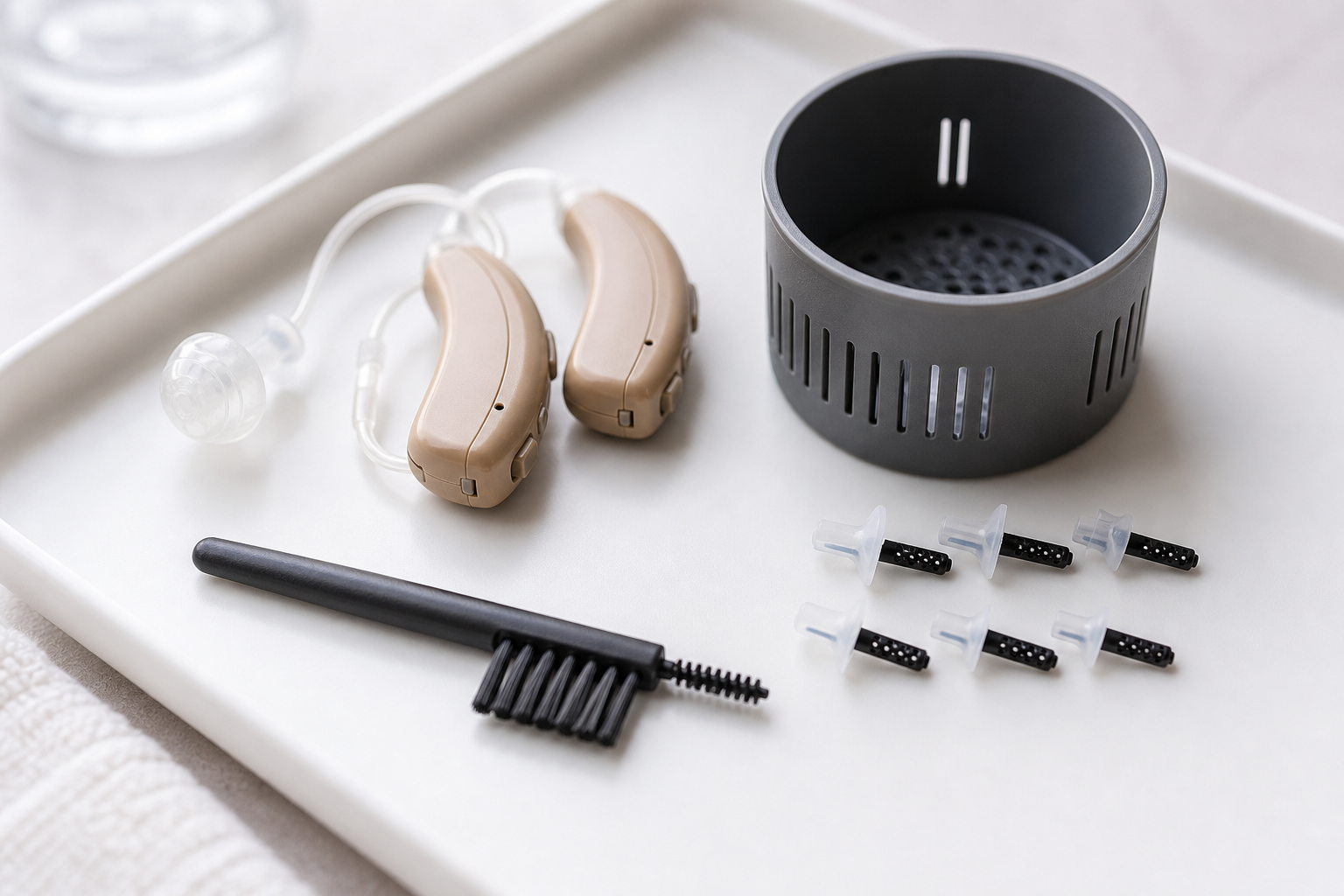
Manufacturers and hearing centers offer accessory sets that make care easier. Cleaning brush, wax filter spares, moisture drying container, battery tester and carrying box are parts of the standard set. It is more economical to purchase these accessories from the beginning than to experience malfunctions later. The carrying case protects the device from impacts while traveling; Drying is especially important after airplane and hotel humidity.
Keeping a stock of spare parts (filter, dome, hose, battery) prevents sudden outages. A spare set is a must, especially for users who live in remote areas or travel frequently. You can obtain suitable spare parts from Nokta İşitme branches.
What Happens at a Professional Care Appointment?
When you bring it to service, your device first undergoes visual inspection. Then, ultrasonic or vacuum deep cleaning is applied. Microphone and receiver inputs are cleaned with special tools. Sound output is measured and compared to factory specifications. Battery compartment and charging contacts are checked. If there is a software update, it will be applied. Finally, you will be given a maintenance report and suggestions to apply at home.
This check, even once a year, detects overlooked problems early. For example, a gradually weakening receiver may not be noticed by the user; measurement reveals this. If a programming update is required, it can be evaluated at the same appointment.
Creating a Care Plan with a Hearing Specialist
Each user's maintenance needs are different. Those with high earwax production change filters more frequently; Those who sweat or lead active lives use moisture drying more often; Older users may need simpler routines. Your hearing care professional should give you a personal care plan at the first device delivery. Keep this plan in writing and update it at annual check-ups.
The maintenance plan may include: daily cleaning steps, frequency of filter changes, use of moisture drying, professional inspection dates, and an emergency to-do list. Planned maintenance is much lower than the cost of unplanned repair.
Device Maintenance During Travel and Flight
Pressure changes in the airplane cabin rarely cause ear discomfort; However, on long flights it may be useful to remove the device and let it rest. You can keep your device on you during the security check; The x-ray machine does not damage the hearing aid. Keep a separate case and spare battery/filter in your travel bag. Continue your drying routine throughout the trip to adapt to different climates (tropical humidity, dry mountain air).
Benefit of Keeping a Maintenance Log
A small maintenance log provides valuable information to service when the problem reoccurs. The date, action taken (filter change, cleaning), problem observed and result can be noted. Records such as "I changed the filter every Monday, the sound stopped again on Wednesday" make it easier to find the root cause of recurring malfunctions. A digital note or a simple notebook is sufficient.
This content is for general informational purposes only and is not a substitute for medical diagnosis or treatment. Consult the manufacturer's manual and your hearing care professional for care instructions specific to your device.
Frequently asked questions
Is it necessary to clean the hearing aid every day?
Yes. Daily light surface cleaning and regular checking of the earwax filter are recommended to maintain sound quality and reduce the risk of malfunction. Deep cleaning should be done once a month or in a professional environment when necessary.
How often should the wax filter be changed?
It usually ranges from once a week to once a month, depending on the intensity of use and earwax production. Attenuation of sound, interruption or complete silence of the device may be a sign of filter blockage.
What should I do if my hearing aid gets wet?
Turn off the device immediately, remove the battery or disconnect it from the charging base. Use a moisture drying container or special drying device. Keep away from heat sources such as blow dryers, radiators or microwaves. If the problem persists, contact service.
What cleaning materials can be used at home?
A soft, dry cloth, cleaning brush and the cleaning kit recommended by the manufacturer are sufficient. Alcohol, thinner, bleach or aggressive chemicals may damage the plastic and electronic parts of the device; should not be used.
How often should professional maintenance be done?
The general recommendation is professional inspection and cleaning at least once a year. For users who experience intensive use, high humidity environments or frequent malfunctions, this period can be reduced to 4–6 months.
Is there a difference in maintenance between in-ear and behind-the-ear devices?
Yes. Filter and ear tip care are more critical for in-ear devices; In behind-the-ear models, cleaning of the tube, dome and microphone input is a priority. With both types, humidity control is important.
What happens to a hearing aid if it is not maintained?
Earwax and moisture buildup reduce sound quality, can clog the microphone and receiver, shorten battery life, and increase repair cost. Early maintenance is the most economical method to extend device life.
Kaynakça ve Referanslar
Bu makaledeki tıbbi bilgilendirmeler aşağıdaki güvenilir kaynaklara dayanmaktadır.
- Sosyal Güvenlik Kurumu — Resmi web sitesi — SGK
- T.C. Sağlık Bakanlığı — Sağlık bilgilendirme — Sağlık Bakanlığı
Get a free initial evaluation for a hearing aid care and inspection plan that's right for you