Minimal appearance
A nearly invisible profile that draws little attention in social settings.
Hearing aids
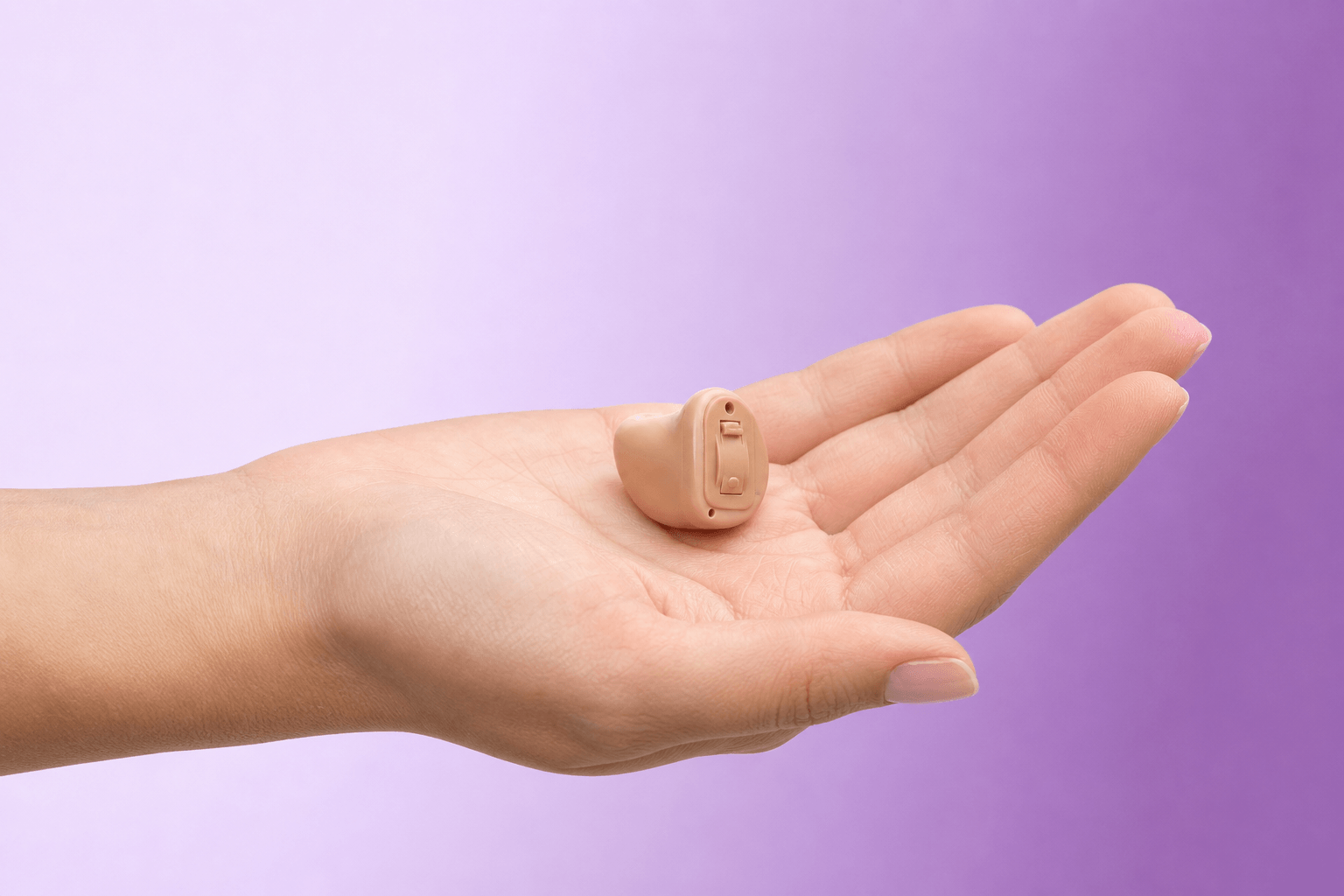
In-the-canal (CIC / IIC) models sit inside the ear canal and aim for a nearly invisible profile. They are considered for mild to moderate loss and for clients who prioritize aesthetics.
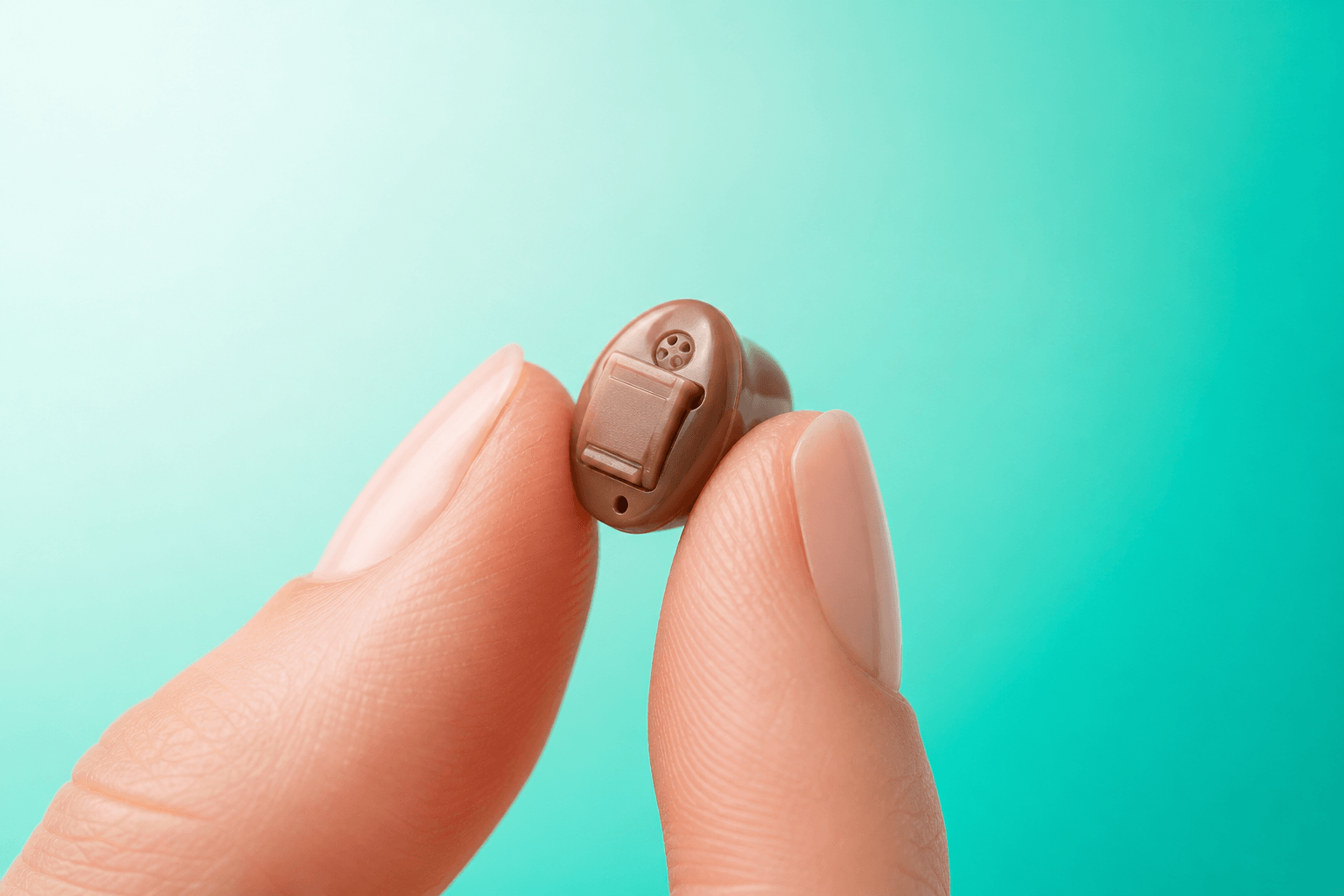
Completely-in-canal (CIC) and invisible-in-canal (IIC) models are placed deep in the ear canal. They are barely noticeable from the outside and are often considered for clients who prioritize aesthetics.
Thanks to the natural structure of the ear canal, some users may experience a more natural sound sensation from the pinna’s sound-collecting effect. Interference with eyeglasses is low.
However, the small housing can limit battery life, Bluetooth access, and manual controls. Ear-canal size and hearing profile must be carefully assessed for suitability.
A nearly invisible profile that draws little attention in social settings.
Benefit from the pinna’s natural sound-collection properties.
Design with low risk of interference from eyeglass temples.
Powerful digital processing options in a small housing.
Professionals and socially active users who prefer the device not to be noticed.
Those who want to avoid conflict between a behind-the-ear unit and eyeglass temples.
Users who want adequate amplification in a compact form.
Canal size and degree of loss are evaluated together.
A precise impression is taken for deep-canal placement.
A micro housing is produced from the custom shell.
Insertion technique and programming training are provided.
Compactness may mean trade-offs on some features; clarify your needs in advance.
Advantage: Advantage: Aesthetics, natural sound, glasses compatibility
Alternative: Note: Small battery, limited manual controls, narrow-canal incompatibility
Most models are unnoticeable from the outside; complete invisibility still depends on ear anatomy.
They are generally considered for mild to moderate loss. For more severe loss, power needs may favor a BTE recommendation.
Yes, they are used in a natural position in the ear canal. Bluetooth availability varies by model.
Professional assessment is required. This page is for general information only and does not replace diagnosis or treatment. No hearing aid model should be recommended as suitable for everyone without a medical assessment.
Book a hearing test appointment to determine whether a device is suitable for you.