Secure retention
Safe retention systems against dropping and pulling.
Hearing aids
Durable housings, colorful designs, and programming options adapted to school life are available. Family involvement and regular follow-up are essential for successful use in children.
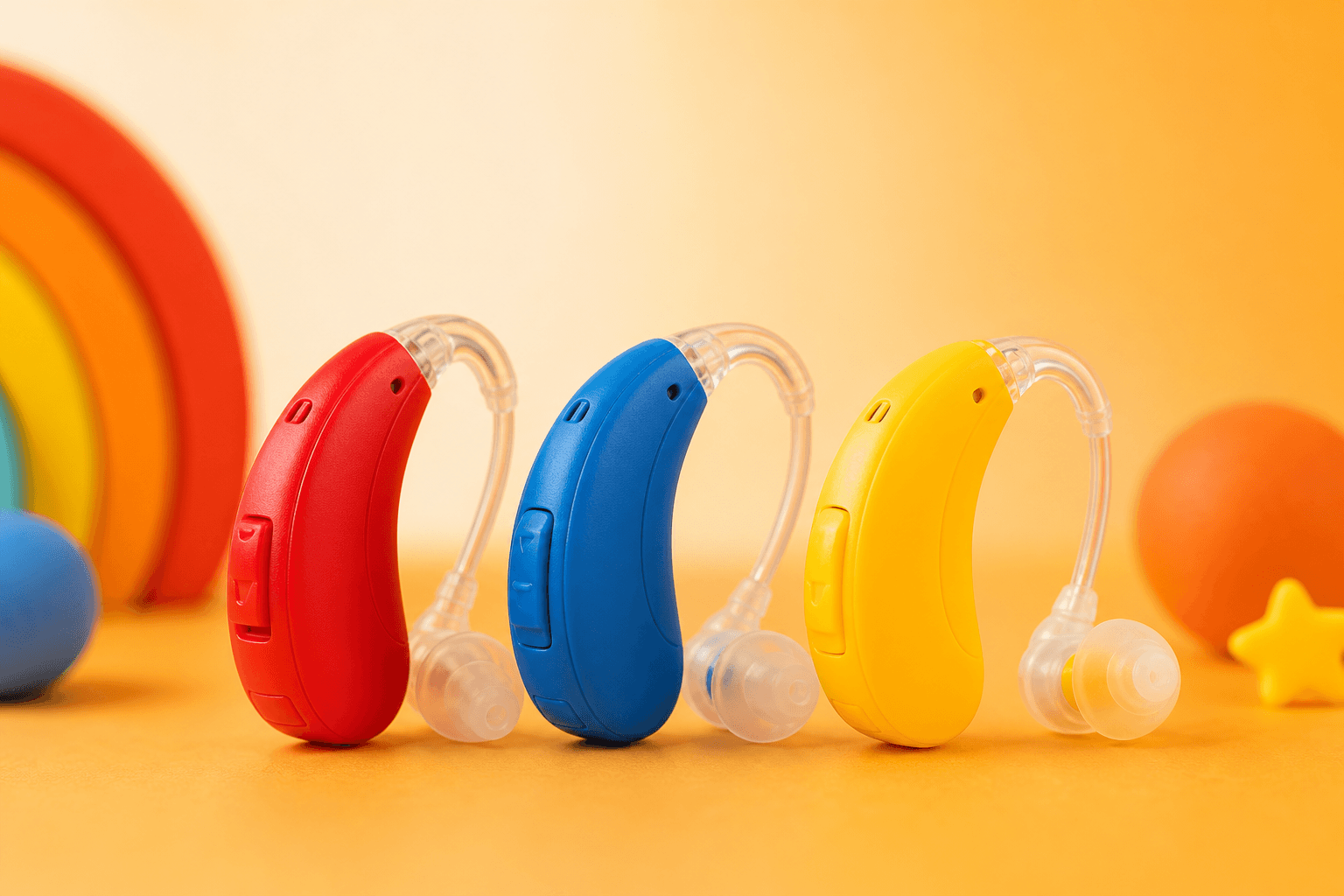
Hearing support in children is critical for language development, school success, and social communication. Pediatric hearing aids are designed with durable housings, secure retention, and colorful styles that fit children’s daily lives.
Different fitting and monitoring strategies are used for infants and school-age children. Family involvement is essential for device monitoring, daily wear time, and listening practice at home.
Regular check-ups are needed for ear growth, program updates, and device condition. Guidance is also provided for formal processes such as SGK support and school notification.
Safe retention systems against dropping and pulling.
Designs in colors children like to encourage ownership.
Parent education on insertion, care, and daily monitoring.
Age-appropriate hearing assessment methods.
Secure fitting and family guidance after early identification.
Classroom support, teacher collaboration, and FM system assessment.
Confidence and communication support among peers.
Age-appropriate audiometry and behavioral tests.
A durable, colorful, age-appropriate model is chosen.
An insertion, care, and daily-use plan is established.
Frequent check-ups for growth and programming needs.
The earlier hearing support begins, the more language and social development are supported.
Advantage: Early support: Language development, school adaptation, social confidence
Alternative: Delay: Communication difficulty, learning challenges, risk of social withdrawal
Soft retention materials and safety clips are used. Family training supports safe monitoring at home.
SGK contribution is also available for children. Counseling is provided on current conditions and application steps.
More frequent visits are planned based on ear growth and programming needs; close follow-up is especially recommended in the early years.
Professional assessment is required. This page is for general information only and does not replace diagnosis or treatment. No hearing aid model should be recommended as suitable for everyone without a medical assessment.
Book a hearing test appointment to determine whether a device is suitable for you.