
Medically reviewed by Nokta İşitme Audiology Team (Audiologist) according to hearing health information standards.
The earmold is a personalized part of the hearing aid that is produced to fit your ear perfectly. While off-the-shelf eartips are sufficient for many users, a custom fit can significantly improve comfort, sound quality, and feedback control. In this article, we explain what an ear mold is, how it is taken, different types of molds and why the right mold is important.
What is an Ear Mold?
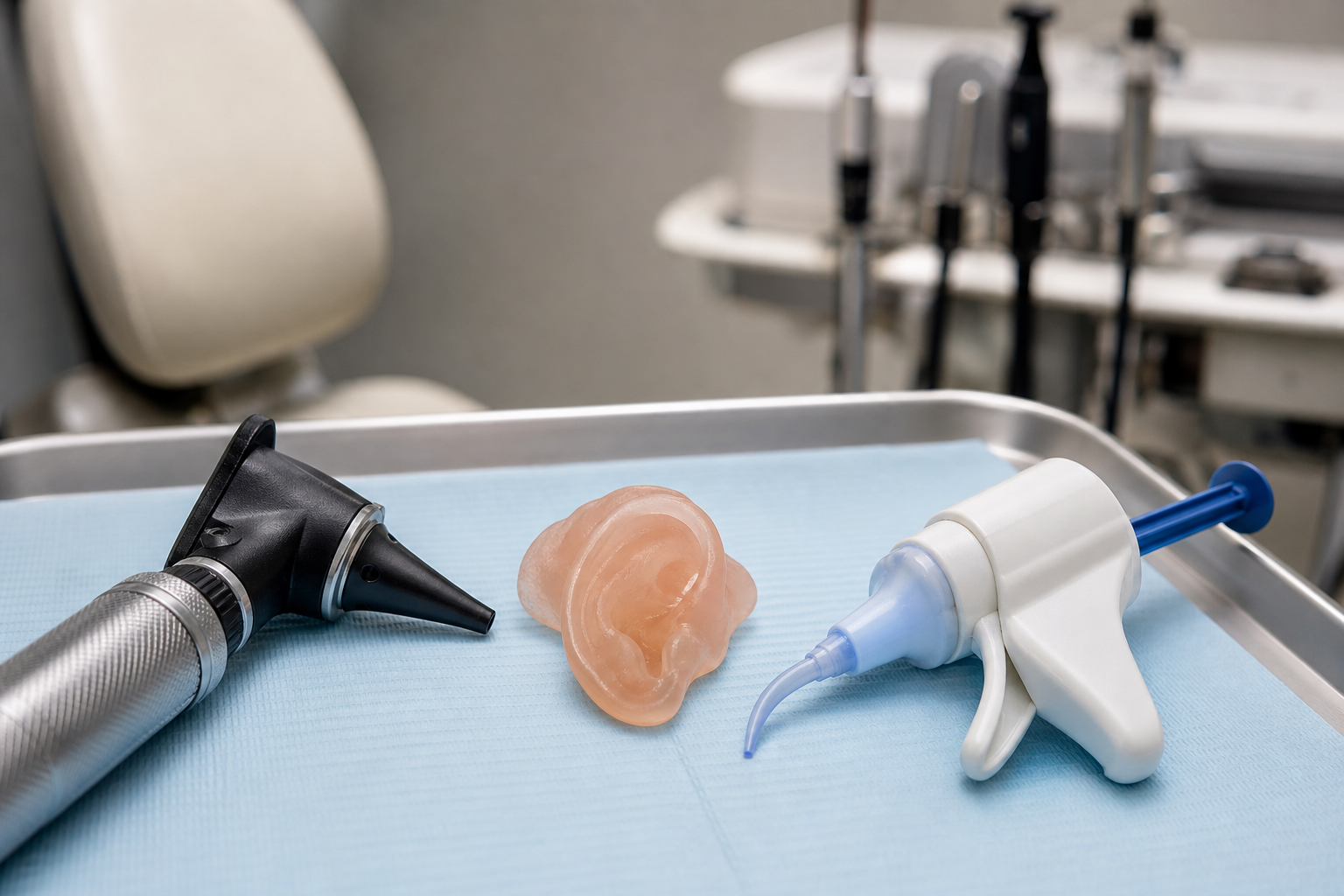
An ear mold or ear impression is a special piece produced according to the individual anatomy of your ear canal and outer ear (pinna). It is usually made of soft silicone or acrylic material. It acts as a bridge between the hearing aid and the ear canal; It transmits the sound to the targeted point and prevents the leakage of sounds from the external environment.
Earmolds are not just for hearing aid users. Swimming headphones, noise-cancelling earplugs, musician headphones and sleeping plugs are also produced using the same measuring principle. However, hearing aid molds require the most precise design in terms of acoustic performance.
As Nokta İşitme, we carry out measurement taking, production follow-up, delivery and fit control within the scope of our ear mold service in our Bozyaka and Yeşilyurt branches.
Earprint (Impression) Taking Process
The first and most critical step in ear mold production is taking the ear print correctly. A poorly taken measurement will result in a mold that fits uncomfortably, leaks sound, or causes feedback. The process should be performed by an experienced audiologist or hearing care specialist.
Pre-Measurement Preparation
Before measurements are taken, the ear canal is examined. If there is excess earwax, it is cleaned out — a clean canal is essential for the impression material to fit correctly. If there is an active infection, a wound in the ear, or severe pain, the procedure is postponed. Chewing movement (mouth open/closed position) before measurement is important for some types of molds; This minimizes the effect of jaw movement on the mold.
Placement of Impression Material
Special impression material (usually two-component silicone) is carefully injected into the ear canal or placed with a syringe. The material hardens within a few minutes. It is important to remain still and not swallow during this period. The hardened impression is gently removed and the quality is checked: if there is a gap, layer separation or missing area, the impression is repeated.
Sending to the Laboratory and Production
The approved size is converted into a mold with the selected material and color in the laboratory. The sound channel, ventilation hole and mounting point are processed according to the hearing aid type. Production time is usually 5–10 business days. When the mold is ready, it is delivered by appointment and the fit is checked by attaching it to the ear.
| Mold Type | Area of Use | Highlight |
|---|---|---|
| Full Shell | In-ear devices, severe hearing loss | Maximum power, good adhesion |
| Half Shell | Moderate-severe hearing loss | Balance of comfort and power |
| Channel type (Canal) | Mild-moderate hearing loss | Invisibility, compact structure |
| Behind the ear ear tip | BTE and RIC devices | Private session, soundproofing |
| Swimming ear | Waterproof protection | Swimming, showering, water sports |
| Noise plug | Sleep, work environment | Noise reduction |
Special Mold Types and Areas of Use
Not every ear is the same; Every hearing need is different. Correct type of mold; The degree of hearing loss is determined by the type of device, ear anatomy and your lifestyle.
Hearing Aid Molds
For in-the-ear (ITE) devices, the mold is part of the device itself. In behind-the-ear (BTE) devices, the mold is a separate ear tip that is attached to the end of the tube. In the receiver channel (RIC) devices, a ready-made dome is usually used; However, in difficult ear anatomy, a special mold may be preferred.
Swimming and Water Protection Patterns
Hearing aid users can use special swim earmuffs to protect their ears while swimming or showering. These molds are made of waterproof material and completely seal the ear canal. Swim ear can also be used independently of the hearing aid.
Noise Canceling and Sleeping Plugs
Special earplugs provide comfort in cases of snoring, traffic noise or loud work environments. Frequency-filtering plugs for musicians reduce harmful levels while preserving stage sound. These products are also produced according to ear size.
The Effect of Ear Mold on Comfort and Performance
A well-fitting fit radically transforms the hearing experience. A poorly fitting mold makes even the best device inefficient.
Sound Quality and Sealing
The special mold ensures the correct accumulation of sound in the ear canal. Sound leakage is reduced; This both improves sound quality and prevents feedback (whistle). A sealed session is critical, especially on high-power devices.
Everyday Comfort
An uncomfortable or painful pattern will result in the device not being used — which means the hearing loss will go untreated. Correct material selection (soft vs hard), correct size and regular control maintain comfort. A break-in period of a few days is normal when a new mold is installed; However, persistent pain or scar formation requires mold adjustment.
Feedback Control
The whistling sound occurs when sound leaks from the mold and returns to the microphone. A loose or incorrectly sized fit is one of the most common causes. Custom molding greatly reduces this problem. If the feedback increases when the mold is renewed or after a weight change, the fit of the mold should be checked.
Who Requires a Special Ear Mold?
Not every hearing aid user needs a special mold. Ready-made domes and ear tips are sufficient for most people. However, special molding is particularly recommended in the following cases:
- The ear canal is narrow, tortuous, or has non-standard anatomy
- If severe hearing loss and high power device is used
- If there is a constant feedback (whistling) problem
- If the pre-made ear tips fall off or cause discomfort
- If the child is a hearing aid user (frequent replacement due to growth)
- If safe seating is required due to active lifestyle (sports, outdoors)
For suitability assessment, hearing test and ear examination are performed together. The need for a mold is determined by the expert according to the device type and your hearing profile.
Earmold Care and Renewal
Ear molds require maintenance, just like hearing aids. Wipe daily with dry cloth; You can wash it gently with soap and water once a week. Do not expose the mold to heat (sun, radiator); It may be deformed. You can store it with the device in a moisture drying container at night.
When Should It Be Renewed?
Ear canal shape changes with age. Weight gain or loss, jaw joint problems, and long-term use may cause the mold to loosen. Sound leakage, increased feedback, pain, or the mold falling out of the ear are signs that replacement is needed. Children require more frequent replacement due to growth—usually every 6–12 months.
When you need a mold renewal, you can get new measurements by contacting our ear mold service. Bringing in your old pattern helps us compare changes.
Things to Consider During Measurement
There are factors that affect measurement quality. Ear cleaning must have been done on the day of measurement; Excessive earwax distorts the measurement. It is important not to talk or move your head during the measurement and to follow the instructions. Measurements should not be taken in the ear canal that is swollen due to cold or allergies.
The Ministry of Health's public information on hearing health and audiology services emphasizes that hearing assessment should be performed by competent health professionals. For up-to-date information, you can visit saglik.gov.tr.
Ear Mold and Hearing Aid Repair
Sometimes the problem is not with the device, but with the mold. Cracked, torn or yellowed molding reduces sound quality. In cases where mold repair is not possible, a new one is produced. In order to distinguish between a device malfunction and a mold problem, an evaluation can be made at our repair and maintenance service.
SGK and Ear Mold
Hearing aid supports within the scope of SGK generally cover the device itself; Coverage may vary for specific earmolds and accessories. For information about current legislation and your rights, it is recommended that you review official sources sgk.gov.tr. Nokta İşitme provides transparent information about the process and costs.
Post Measurement: Delivery and Fine Tuning
When the mold comes from the laboratory, a perfect fit may not always be possible in one go. It stays in the delivery appointment and gets stuck in the ear; Pain, pressure point or sound leakage is checked. If necessary, small rasping or venting is done on the mold. This fine tuning is critical for comfort and acoustic performance.
It is normal to get used to the new pattern in the first few days. A slight pressure sensation is expected; Sharp pain or wound formation should be reported immediately. If the pattern sound channel is too long, the cough reflex may be triggered; In this case, abbreviation is required. If you have any problems after delivery, contact contact and make a control appointment.
Mold Material Selection: Soft or Hard?
Silicone molds are soft and flexible; It is preferred for daily comfort. Acrylic molds are harder; It provides good adhesion, but may cause discomfort for some users. Rigid mold may be preferred in cases of severe hearing loss and active lifestyle. Your audiologist recommends the most suitable material according to your ear anatomy and device type.
Color selection is important from an aesthetic perspective; Patterns close to skin color or transparent reduce visibility. Brightly colored molds prevent loss and encourage use in children.
Common Mold Problems
It becomes loose and falls out of the ear and leaks sound. It stays tight and causes pain and redness. Crack or tear causes hygiene problems and sound distortion. Yellowing and hardening are signs of material aging. Each of these problems requires a different solution: re-measurement, filing or full restoration. It is not recommended to forcefully file or heat the mold at home.
Vent size may affect the perception of tinnitus in people who experience tinnitus and use special molds. Therefore, if there is a tinnitus complaint, tinnitus evaluation results should be taken into account during mold design.
Appointment and Next Steps
You can make an online appointment to have your ear mold measured or to check the fit of your current mold. For your questions, contact us on our contact page. Our experienced team determines together the mold solution that best suits your ear anatomy and hearing needs.
If you have accompanying complaints such as tinnitus, tinnitus evaluation may also be useful before mold evaluation. The comprehensive hearing health approach aims to improve your entire hearing experience, not just the device.
Ear Mold and Hearing Aid Programming
It is recommended to review the device programming after the custom mold is installed. Amplification settings must be updated when the pattern fit changes the audio transmission. Fine-tuning appointments in the first weeks are helpful for comfort. If the sound is too loud or too low, make a programming appointment.
The best results are obtained when the pattern and programming are evaluated together. Simply changing the pattern and leaving the programming unchanged may not provide the expected improvement.
3D Scanning and Digital Measurement Technology
In addition to traditional silicone impression, laser or optical 3D ear scanning is also used in some centers. Digital measurement may be advantageous, especially in patients with limited mobility or in situations requiring repeat measurements. Both methods, when applied correctly, allow the production of quality molds. Which method is suitable for you is determined during the evaluation.
Mold Rejection and Acclimation Process
Some users reject the first pattern; This is a normal process. A foreign body sensation in the ear canal is common, especially in the first weeks. A gradual adaptation program (wearing it for a few hours a day and increasing the time) is recommended. If there is real incompatibility (pain, wound, constant falling), the mold is re-evaluated. Being patient and staying in touch with the expert gives the best results.
Pattern Matching in Binary Ear Users
For those using bilateral hearing aids, separate measurements are taken for each ear. Ear anatomies are not symmetrical; One mold does not fit the other. It is recommended that two molds be delivered on the same day and programmed together. When one-sided mold renewal is required, it is useful to check the other side.
Ear Mold and Hygiene
If mold is not cleaned regularly, the risk of fungal and bacterial accumulation increases. Hygiene is critical, especially in humid climates and with users who sweat. Wash the mold once a week with warm water and mild soap; Wait for it to dry completely. Cracks or surface irregularities indicate a hygiene problem; renewal should be considered.
Ear Mold in Elderly Patients
With advancing age, the ear canal skin becomes thinner and its shape change may accelerate. Soft silicone mold is preferred. Device insertion and removal may be difficult in patients with arthritis or tremor; Molds with large handles or clear markings can be used. Caregiver training, mold hygiene and regular check-up appointments are of particular importance for older users.
Ear Mold Cost and Process Transparency
Duration and cost in each of the measurement, production and delivery stages should be shared in advance. There are no hidden fees at Nokta İşitme; Net price information is provided for services outside the scope of SGK. We explain the whole process step by step during the appointment; We will be happy to answer your questions.
Frequently Asked Practical Questions
"Can I swallow while taking measurements?" — It is recommended not to swallow or talk until the impression material hardens. "My mold fell off, can I glue it on?" - No; Household adhesives can be toxic and impair acoustic performance, bring it in for service. "Can I use a different device with the same mold?" — Usually no; The mold is produced specifically for the device model. For such practical questions, you can consult us through our contact channels
This content is for general informational purposes only and is not a substitute for medical diagnosis or treatment. If you have concerns about your ear health, it is recommended that you consult an ENT specialist or audiologist.
Frequently asked questions
What is an earmold and what does it do?
An earmold is a custom piece manufactured to the individual size of the ear canal. Ensures a secure and leak-proof fit of the hearing aid to the ear; It improves sound quality, reduces feedback (hiss) and increases comfort.
Is ear imprinting painful?
No. The procedure is usually painless. Special silicone or impression material is placed in the ear canal and waited for a few minutes. Once the material has hardened, it is gently removed. Rarely, there may be a slight feeling of pressure.
How long does it take to prepare an ear mold?
Once the impression is taken, production in the laboratory usually takes 5–10 business days. Duration may vary in case of emergency or existing mold renovation. When production is completed, delivery and compliance checks are made by appointment.
What are the types of earmolds?
There are different types such as full shell, half shell, canal type, special ear tip for behind the ear, swimming ear, ear plug and musician filter. It is selected according to need and device type.
When should earmolds be replaced?
Ear canal shape may change over time; It may become loose, especially with weight change, aging or long-term use. Sound leakage, increased feedback, or a feeling of discomfort are signs of the need for pattern renewal. The general recommendation is a check every 2–4 years.
Are ear molds different in children?
Yes. As the children's ear canal grows, the mold must be renewed. Softer material and frequent inspection may be required. Mold fit is especially important for child hearing aid users.
Can measurements be taken when there is an ear infection?
If there is an active ear infection, pain, or a wound in the ear canal, measurement is postponed. The procedure is planned after ear health returns to normal. Audiologist or ENT evaluation is recommended before measurement.
Kaynakça ve Referanslar
Bu makaledeki tıbbi bilgilendirmeler aşağıdaki güvenilir kaynaklara dayanmaktadır.
- Sosyal Güvenlik Kurumu — Resmi web sitesi — SGK
- T.C. Sağlık Bakanlığı — Sağlık bilgilendirme — Sağlık Bakanlığı
Get a free preliminary evaluation for your right earmold and hearing aid fit