
Medically reviewed by Nokta İşitme Audiology Team (Audiologist) according to hearing health information standards.
«Are there invisible hearing aids?» The question usually comes in the second sentence. First sentence: "I don't hear it, but I don't want anyone to know." We understand. Hearing aids are still seen as a stigma of old age; whereas intra-canal patterns are not noticeable for most people. But it is not suitable for everyone — this should be said from the beginning.
A 52-year-old client who came for a trial in Bozyaka said, "No one should understand that I am wearing a device in the meeting." The ear canal turned out to be suitable, we tried IIC. Three weeks later he said, "Only my wife knows." But his friend next to him had a narrow canal and forward loss — we suggested behind the ear. Invisibility is a nice goal; The right ear and the right loss are essential.
What is an Invisible Hearing Aid?
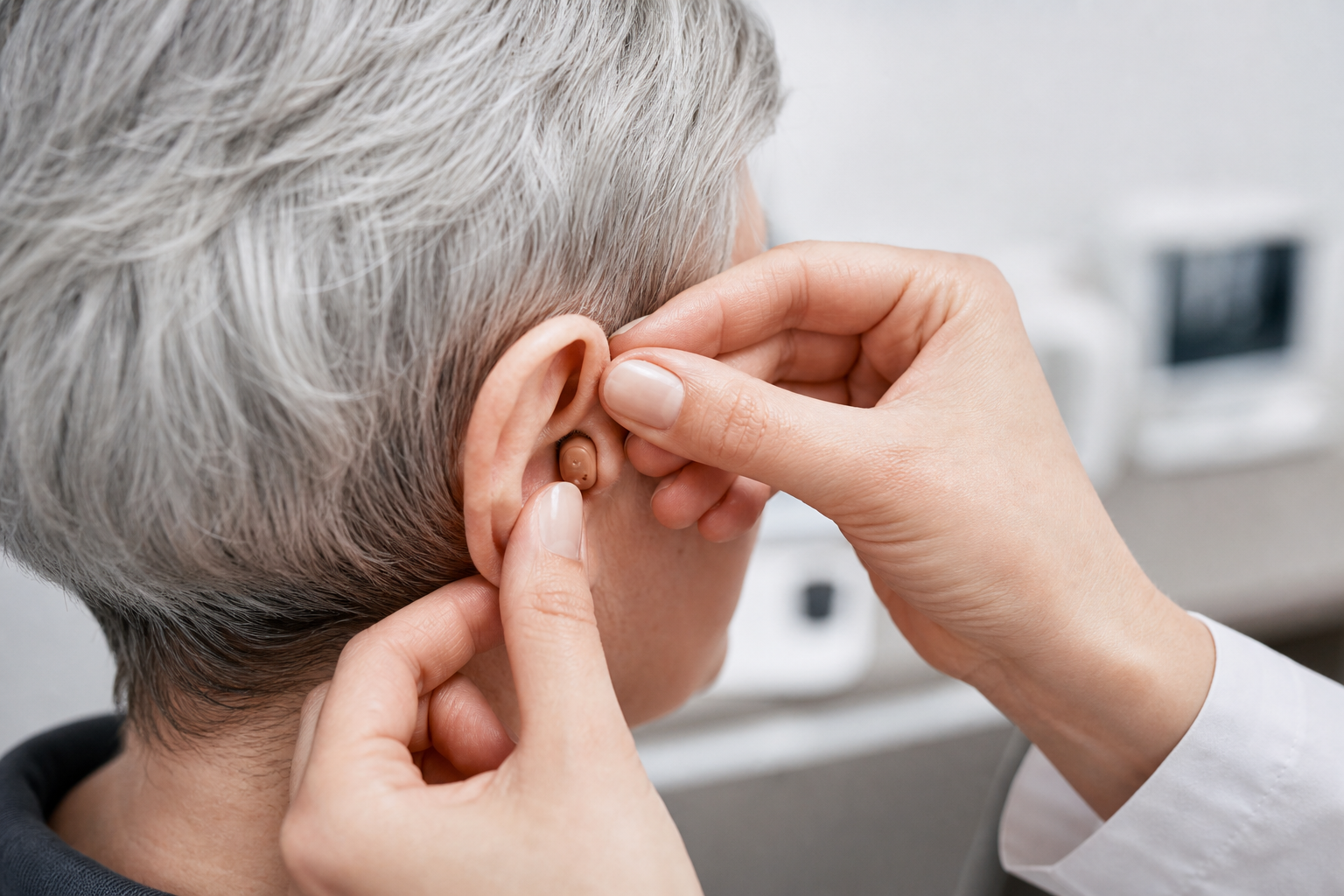
Invisible hearing aid is the colloquial name used for specially produced models that fit inside the ear canal. Technically, intra-ear (ITE) are the deepest-sitting subtypes of the family: CIC and IIC.
The device is produced according to your ear mold. When viewed from the outside, most of the time nothing is visible; The hair or auricle already covers it. «Invisible» is the marketing word; It actually means mini and hidden.
We explained all in-ear types in ourIn-ear hearing aid guide. This article focuses especially on the most discreet models.
Difference between IIC and CIC
Both are inside the channel; There is a difference in depth and size.
| Feature | IIC (Invisible-in-Canal) | CIC (Completely-in-Canal) |
|---|---|---|
| Location | The deepest point of the channel | A little more on the surface |
| Visibility | Minimum | Too low |
| Removing and installing | More difficult, rope help may be required | A little easier |
| Battery / charging | Too small; change is hard | A little more accessible |
| Power range | Light-medium | Light-medium (some models are slightly stronger) |
| Phone usage | Right to the ear may be difficult | Less problems generally |
The answer to the question "Which is better" lies in your channel structure. IIC may not fit in a narrow and tortuous canal. IIC possible in wide channel. We understand this when measuring and taking ear molds — choosing from the catalog is not enough.
Advantages
- Visibility: Reduces pressure to 'wear a device' in social and professional environments.
- Phone position: In CIC and some IIC models, the phone is used at natural ear level.
- Wind noise: Less affected by external wind than behind-the-ear models.
- Mask and headphones: More comfortable in some activities since there is no band behind the ear.
- Custom production: The mold fits your ear; Comfort is personal.
Visibility alone is not a sufficient reason. Hearing is first; Privacy is second. But we have many clients who want both of them together and they are satisfied with the appropriate profile.
Limitations and Whom It Is Not Suitable For
Let's be honest: the invisible device is not for everyone.
Situations that may not be appropriate
- Profound hearing loss: Small body does not fit large amplification.
- Very narrow or tortuous channel: IIC may not be physically produced.
- Frequent ear discharge or infection: High risk of moisture and hygiene.
- Excessive earwax production: The device clogs frequently; maintenance burden increases.
- Hand tremors or arthritis: It becomes difficult to remove and insert the small battery.
- Children: Growing ear; Frequent renewal required. Generally, behind the ear is preferred.
One of our clients wanted "absolutely invisible"; The loss was medium-high, the channel is narrow. We tried behind-the-ear RIC, and after a week he said, "I can hear it, I don't care about visibility." Correct hearing comes before correct aesthetics.
For Which Hearing Loss Is It Suitable?
General framework: mild and moderate sensorineural loss, appropriate canal anatomy. It is frequently recommended for profiles with high frequency loss — because the clarity of speech decreases in high-pitched sounds, the device supports that band.
In case of conductive loss, medical treatment is considered first; device is not always the first option. In mixed loss, device power and channel volume are evaluated together.
| Loss level | Invisible device | Alternative |
|---|---|---|
| Light (26–40 dB) | Frequently available | Behind the ear is also possible |
| Medium (41–55 dB) | May be suitable | Depending on channel and model selection |
| Mid-advanced (56–70 dB) | Limited | Behind the ear / RIC recommended |
| Advanced (71+ dB) | Generally not suitable | Powerful BTE models |
The definitive answer is given after hearing test and ear mold. Ordering by looking at the catalog photo is not the right way.
Maintenance and Daily Use
The invisible device works in the ear canal—that is, surrounded by earwax and moisture. We hear complaints from clients who neglect maintenance that "it broke down once in a month"; Most of them are due to neglect.
Daily routine
- When you take it out in the evening, put it in the drying box (for battery operated models)
- Change wax filter regularly — the number one cause of clogging
- Do not over-clean the ear canal; Do not use cotton swabs
- Do not wear while showering or swimming
Rechargeable or battery operated?
Rechargeable options are limited at IIC; Most models are battery operated. Battery too small — replacement requires patience and skill. Rechargeable in-ear models are possible with a slightly larger body; This may reduce privacy somewhat. You can see our article Differences between rechargeable and battery operated.
Price Elements
The «Invisible» tag alone does not double the price. The main factors that determine the price:
- Technology segment:Entry, mid, upper, premium — processor and feature difference
- Custom mold production:Laboratory cost
- Wireless connectivity: Bluetooth, app control — may be limited in small body
- Scheduling and follow-up: Initial adjustment, control appointments
- Brand and warranty
At the same level of technology, IIC/CIC may be slightly more expensive behind the ear — due to miniaturization and custom manufacturing. But there is a gap between premium IIC and entry segment behind-the-ear; Don't think "invisible = most expensive".
We explained the segments and SGK contribution in our articleDevice price factors. If the invisible model is also on the approved list, support may be available; If it is not on the list, the difference is entirely up to you.
Invisible Device or Behind the Ear?
«Make it invisible» should not be the only criterion. Comparison chart helps in decision making.
| Criteria | IIC / CIC | Behind the ear (BTE / RIC) |
|---|---|---|
| Visibility | Too low | More visible |
| Forward loss | Generally not suitable | Available |
| Ease of maintenance | Harder | Easier |
| Battery / charging | Small, difficult access | Bigger, practical |
| Bluetooth | Limited (depending on model) | Wide selection |
| Child | Rarely | Frequent choice |
RIC (behind-the-ear) models are also quite small; It makes sense to try RIC unless it says "if it doesn't become invisible, the world will end". Many clients give up on visibility and choose hearing quality — and that's the right decision.
Scheduling and Tracking
The invisible device should also be programmed individually. The mold fits your ear, but the sound adjustment is made according to your audiogram. In the first week, "my own voice is too loud" or "chewing noise is uncomfortable" is normal; It improves with fine-tuning appointments.
The small body may not have a control button; app or remote control may be required. Ask «how do I adjust the sound» before purchasing. If the application is difficult for elderly clients, a slightly larger model or behind-the-ear should be considered instead of CIC.
Trial Process
The invisible device is placed on order — the mold is purchased, production takes a few weeks. That's why experimentation is important. In similar technology, «how I hear with this gain» is tested with a temporary in-ear or behind-the-ear model. If you like it, special production will start.
In the trial, check: your own voice, chewing sound, phone, noisy environment. The feeling of "there is something in my ear" is normal in the first days; You get used to it in a few weeks.
Frequently Asked Practical Questions
«Is there a pressure problem on the plane?»
With the intracanal device, there is no "blocking" feeling as obvious as behind the ear; However, doing chin exercises on the descent helps relieve it.
«Can they both become invisible?»
If there is loss in both ears, two intracanal devices are possible. If the profile is suitable, double application is recommended — the complaint “I still don't get it” is common with a single ear device.
«Hair is short, will it still be visible?»
If the IIC is deep, hair length does not matter most of the time. CIC is a little more superficial; With very short hair, the silhouette can be seen from the side profile.
Who Is It A Good Choice For?
To summarize, the invisible hearing aid makes sense in the following profile:
- Slight-medium loss
- Adequate wide ear canal
- Visibility priority is high
- Compliance with maintenance routine
- No forward loss or frequent ear problems
Telling us if you're not a fit won't cost us a sale — the wrong device will bring us back, but with dissatisfaction. Right model, right ear.
Contact Us for Evaluation
Invisible device suitability is determined by measurement, not guessing. Write to us on our Contact page or come to Bozyaka branch. We evaluate the ear mold, test result and your lifestyle together.
You want to hear; You don't want anyone to notice — both are possible. But first find out if your ear and your loss allow it. If it is not suitable, we will find another solution that makes you feel better. This also counts as success.
Frequently asked questions
Are invisible hearing aids really invisible at all?
To say it is completely invisible is an exaggeration. Since IIC and CIC models sit deep in the ear canal, they are not noticeable from most angles. A small piece may be visible when viewed very closely or from a certain angle.
What is the difference between IIC and CIC?
IIC (Invisible-in-Canal) sits at the deepest point of the canal and is the most hidden option. CIC (Completely-in-Canal) remains a little more superficial; It might be a little easier to take it off and put it on. They are both from the in-ear family.
Is the invisible device suitable for all types of hearing loss?
No. It may be appropriate for mild to moderate losses. If there is forward loss, very narrow canal, frequent ear discharge or limited dexterity, the behind-the-ear model may be more logical.
Is the invisible device difficult to maintain?
Since it is inside the ear, it is affected by earwax and moisture. Daily cleaning, wax filter replacement and drying box use are important. Since it is so small, battery replacement or charging may require finger dexterity.
Is the invisible device more expensive?
Due to special molding and miniaturization at the same level of technology, it may generally be slightly higher than the standard behind the ear. What really determines the price is the technology segment and features.
Is there any problem when using the phone?
When the IIC sits deep, it can sometimes be difficult to lean the phone fully against the ear. This is less of an issue on CIC or slightly more surface models. It is important to test with your own phone during the trial.
Does SGK cover the invisible device?
SGK contribution depends on the device being on the approved list, not on its visibility. Support may be available for suitable models in the list. Get the current list from your contracted centre.
Kaynakça ve Referanslar
Bu makaledeki tıbbi bilgilendirmeler aşağıdaki güvenilir kaynaklara dayanmaktadır.
- Oticon — In-the-ear hearing aids — Oticon
- Phonak — Custom hearing aids — phonak
- WHO — Deafness and hearing loss — World Health Organization
 Hearing Aids
In-the-Ear vs. Behind-the-Ear Hearing Aids
In-the-ear or behind-the-ear hearing aid? A comparison of visibility, power, comfort, and…
Read more → Hearing Aids
How to Choose a Hearing Aid
How do you choose a hearing aid? Testing, technology level, style, budget, and trial peri…
Read more →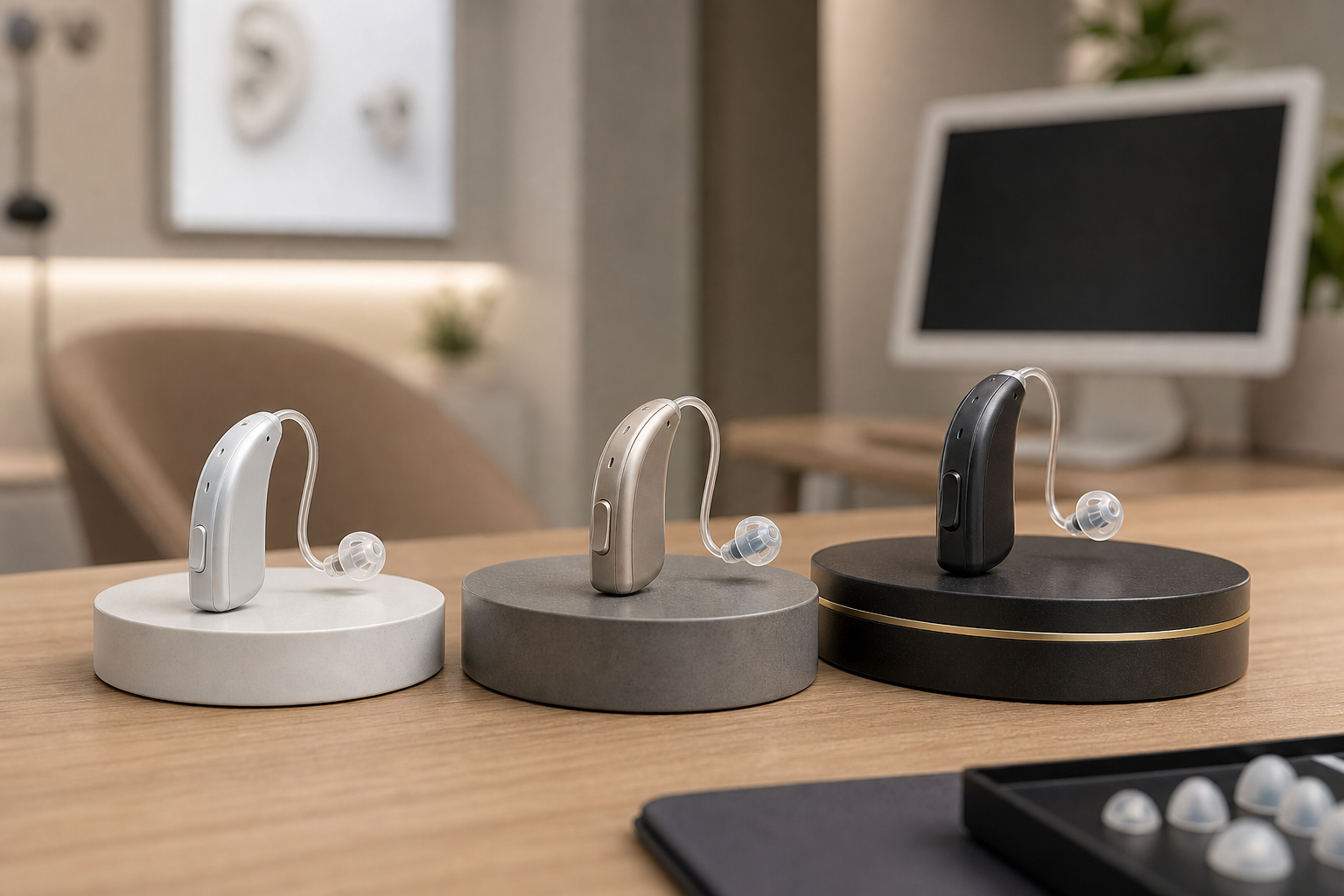 Hearing Aids
2026 Hearing Aid Pricing Guide
What affects hearing aid prices in 2026? Technology levels, SGK contribution, and a compa…
Read more →Request evaluation for stealth device compliance