
Medically reviewed by Nokta İşitme Audiology Team (Audiologist) according to hearing health information standards.
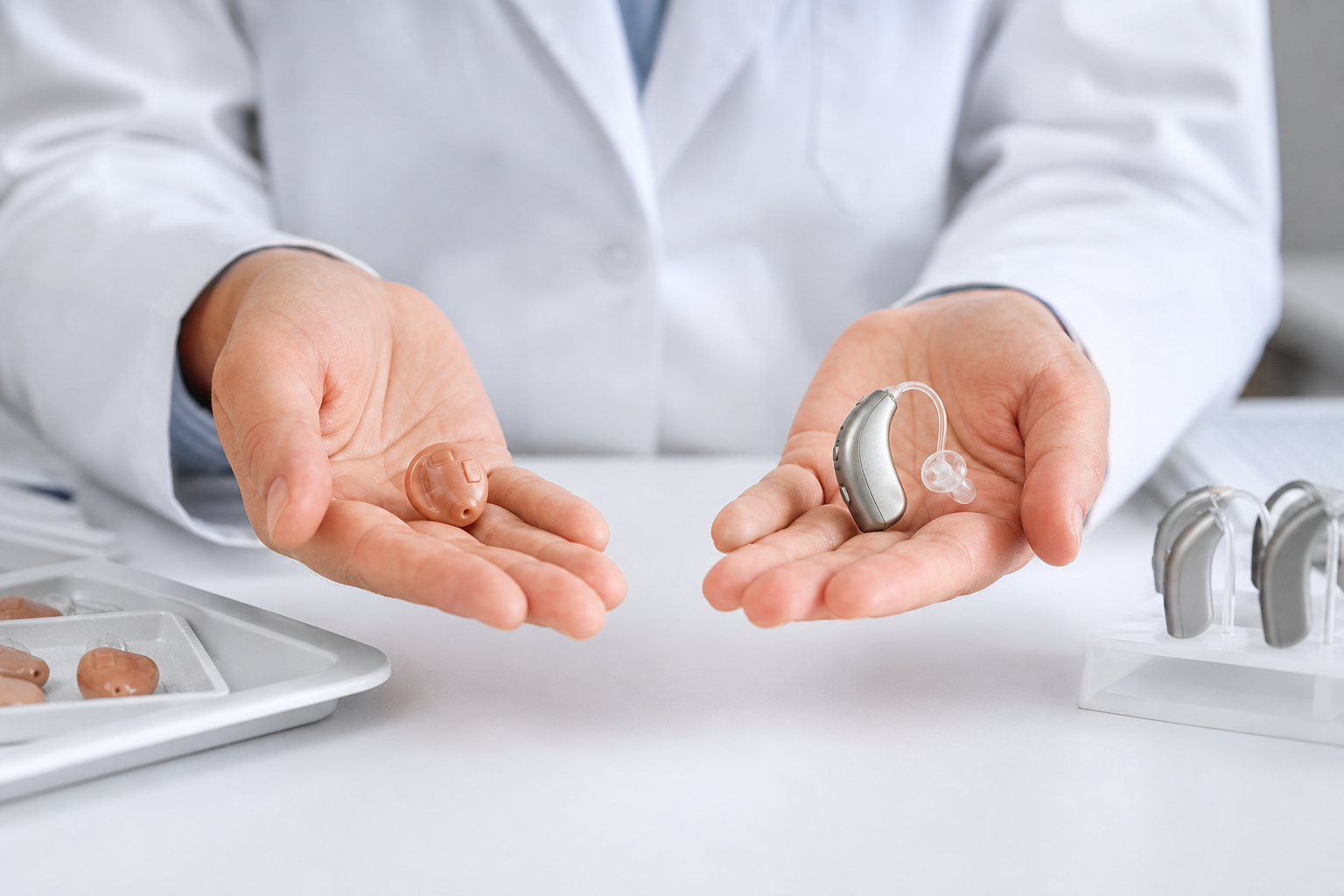
When you enter the store, a small, almost invisible piece sits side by side with another model that sits behind the ear. Both help you hear; But where it sits, the comfort it feels and the daily care are completely different. When choosing between in-the-ear hearing aids and behind-the-ear (BTE), the question «which one is fashionable?» but "which one suits my ear and my life?" The question is important.
Half of our clients in Izmir start by saying "don't let it be seen"; After the test results and ear examination, they sometimes have to go behind the ear. This isn't a failure — this is how the right match happens.
What is an in-ear (ITE) device?
In-ear hearing aids fit into a special ear mold; Most of it remains in the ear canal or auricle. There are full shell, half shell, in-channel (ITC) or full deep channel (CIC) subtypes depending on size.
They look small; That's why the first choice often falls here. But as the size decreases, battery/charging space, processor power and additional features may also be limited.
Advantages of the in-ear device
- Compact and relatively discreet design
- Placing the phone in a natural position against the ear
- No tube coming out from behind the ear
- For some users, the feeling of "my own voice" is more natural
- Less overlap with hat, mask and glasses
Disadvantages of in-ear device
- More exposure to earwax and moisture
- Battery replacement or charging difficulty in small models
- Failure to provide sufficient power in severe hearing loss
- Maintenance and cleaning require more attention
- Fitting problem if the ear canal is narrow or irregular
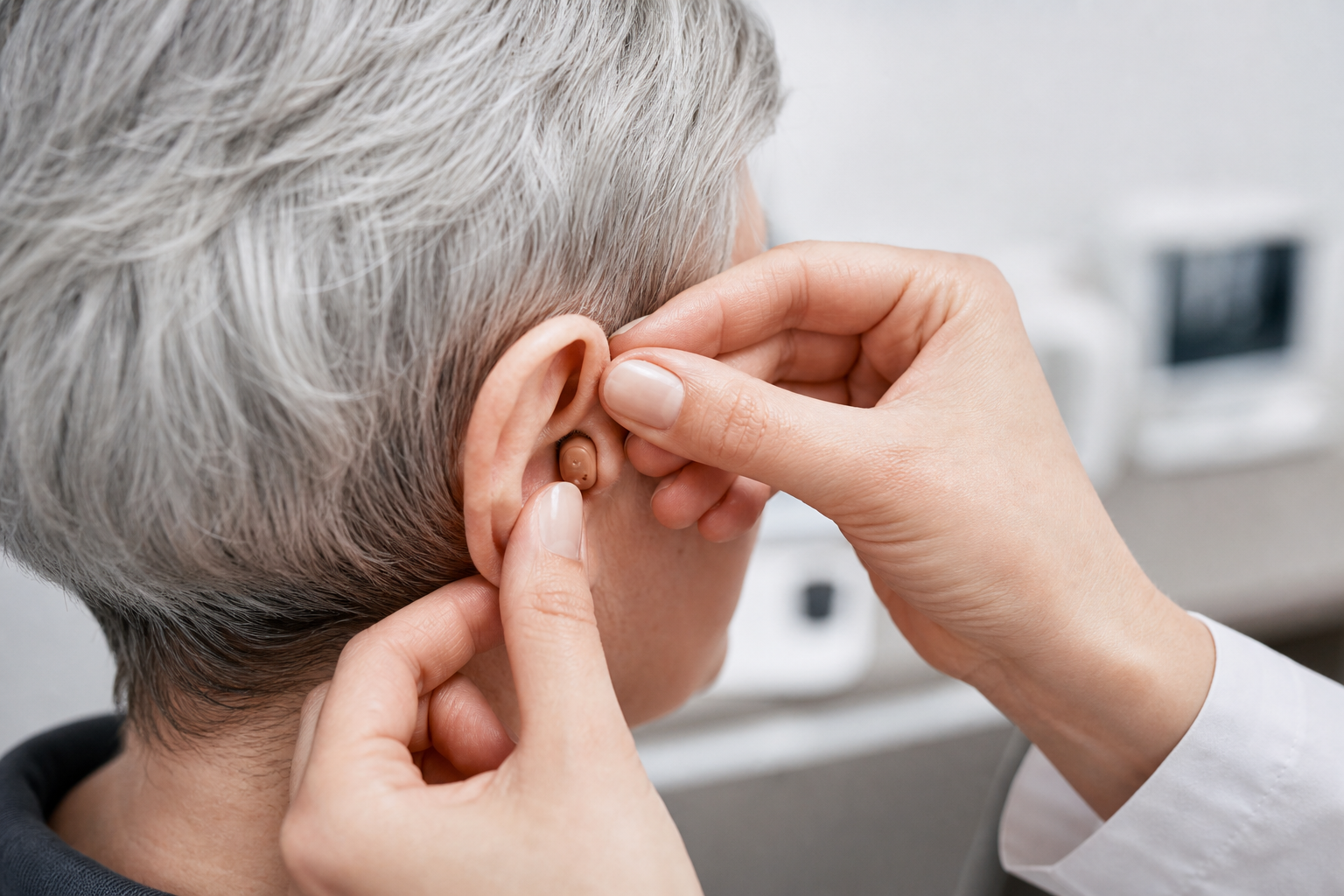
Those looking for invisible hearing aids often look for in-ear or deep canal models. There is no such thing as completely invisible; but it can be quite hidden by hair and ear anatomy.
What is a behind-the-ear (BTE) device?
The main body sits behind or above the auricle. A thin tube or cable (receiver cable on RIC models) is connected to the mold or dome in the ear canal. In the RIC type, the speaker is directly in the ear; In classic BTE, the speaker is in the body.
The BTE family offers a wide range of powers, from mild to profound hearing loss. It is also the standard choice in children's applications.
Advantages of behind-the-ear device
- Wide power range; Reliable in forward losses
- Larger battery or charger
- Maintenance and cleaning are generally easy
- Hose/die replacement possible without changing the body
- It is more practical to adapt to the growing ear of children
- Extensive hardware and accessory ecosystem
Disadvantages of behind-the-ear device
- Visible on the ear
- Hose maintenance and periodic replacement
- Fit control with mask band, goggle stem
- Wind hum is evident in some models
- Sometimes it is uncomfortable to hold the phone to the ear
Comparison table
| Feature | In-the-Ear (ITE) | Behind the Ear (BTE) |
|---|---|---|
| Visibility | Low – medium | Medium – high |
| Hearing loss level | Light – intermediate/advanced | Light – very advanced |
| Ease of maintenance | Medium – hard | Easy – medium |
| Comfort (long time) | Variable by person | Generally good |
| Earwax sensitivity | High | Low – medium |
| Child suitability | Limited | High |
| Bluetooth/streaming | Depending on model | Wide selection |
| Repair and service | The body is small, the repair is sensitive | Body accessible |
Who is suitable for in-ear use?
Mild-moderate hearing loss, sufficient ear canal volume and dexterity to perform regular maintenance are the basic conditions for in-ear surgery. It is frequently preferred by professionals with high visibility priority, users with active social lives and users who can undertake technical maintenance.
If the ear canal is wide and smooth, full deep canal models are almost unnoticeable from the outside. But if the channel is narrow, it may be necessary to move to a higher size or return to BTE — forcing will disrupt comfort.
Situations that are not suitable for in-ear use
- Profound sensorineural hearing loss
- Frequent otitis externa or chronic ear discharge
- Excessive cerumen (earwax) production
- Too small or deformed ear canal
- Severe hand tremors (small battery/charging difficult to manage)
Who is suitable for behind-the-ear surgery?
Profound hearing loss, child and elderly users, situations where care is managed by someone else, and long daily use make BTE stand out. Hose replacement is cheap and fast; The mold renewal routine in the growing child's ear is clear.
For adults who are concerned about "not being visible", color harmony can be reduced to an acceptable level with micro RIC models and hair styles. Even if complete privacy is not possible, the benefit of hearing often outweighs the concern for visibility.
Comfort and sound perception
In-ear wearers sometimes feel «blocky» at first; The adaptation process may take a few days. BTE users generally report less congestion on the first day. But long hours of comfort are possible with a good fit that fits in the ear.
You can hear your own voice (occlusion effect) more clearly in in-ear models. Vented mold or duct size adjustment reduces this effect — programming and mold workmanship are critical here.
Maintenance and life
Ear devices should be cleaned every evening; Earwax can clog the speaker. In BTE, the body remains dry and clean even if the speaker is in the ear. Cleaning guide applies to both types; implementation details vary.
Service needs are sometimes resolved faster in BTE because body access is easy. Since in-ear repairs are micro-scale, the time may take longer.
Children and the elderly
Almost standard BTE in children. The pattern changes as the ear grows; The device body may remain the same. Ear insertion is rarely recommended in children for both safety and growth reasons.
Manual dexterity, vision and cognitive status come to the fore in the elderly. BTE models with large batteries or rechargeable batteries are practical. «Not to be seen» remains in the background; «I can put it on and take it off, let me hear it» comes first.
Price and technology level
The mid-segment in-ear and behind-the-ear models of the same brand may be in a similar price range. It's features like Bluetooth, multi-programming, and advanced noise management that drive the price up — not where the device sits.
Hearing aid selection process, first the hearing profile and need, then the type decision should be made. If the type is chosen first and forced after the test, satisfaction decreases.
Evaluation in Izmir
Humid climate and seaside life make the issue of humidity/protection in in-ear devices a little more prominent. Regular cleaning and dry storage habits are essential. In our Izmir hearing aid service, ear examination, audiometry and trial are carried out together; The type decision is made in your ear, not at the table.
Practical decision summary
| Your priority | Trend |
|---|---|
| Maximum privacy | Intra-ear / deep canal |
| Profound hearing loss | Behind the ear |
| Easy maintenance | Behind the ear |
| Child | Behind the ear |
| Long battery life, big charge | Behind the ear |
| Mask/glasses/hat compatibility | In-ear (depending on the situation) |
Conclusion
There is no "winner" between in-ear and behind-the-ear; There is the right match. Visibility is important, but the level of your hearing loss and the anatomy of your ear set the limits. Saying "I want in-ears" without trying is as inadequate as saying "BTE is ugly" without trying.
Try both types for a short time if possible. Whichever is less tiring in daily conversations, phone calls and noisy environments is your device. You can contact us for ear examination and type evaluation by appointment.
Frequently asked questions
Is in-ear or behind-the-ear better?
There is no single 'better'. In-ear may be more discreet; Behind the ears are generally stronger and easier to care for. The level of hearing loss is determined by ear anatomy and lifestyle.
Who is the in-ear device not suitable for?
The in-ear may not be suitable for very narrow canals, frequent infections, excessive ear discharge, or severe hearing loss. Audiological evaluation is required.
Is a behind-the-ear device more visible?
Yes, it stays on the ear. But modern models are small; Options compatible with hair and skin color reduce visibility.
Can both types be rechargeable?
Yes. There are rechargeable options in both in-ear and behind-the-ear models. In small in-ear models, the rechargeable alternative may be more limited.
What type of earmold is required?
Ear impressions are taken on special in-ear devices and the in-ear part (mould/dome) of behind-the-ear devices. Comfort and sound quality depend on it.
Which type is preferred in children?
Behind-the-ear is generally recommended for children due to the growing ear, durability and ease of care.
Does the device type affect the price?
The main determinant is the level of technology. Two types in the same segment may be in a similar price range.
Kaynakça ve Referanslar
Bu makaledeki tıbbi bilgilendirmeler aşağıdaki güvenilir kaynaklara dayanmaktadır.
- ASHA — Types of hearing aids — American Speech-Language-Hearing Association
- NIDCD—Hearing aids — NIH
- Oticon — In-the-ear hearing aids — Oticon
 Hearing Aids
Who Is a Good Candidate for Invisible Hearing Aids?
What are invisible hearing aids? IIC vs. CIC differences, advantages, and limitations. Su…
Read more →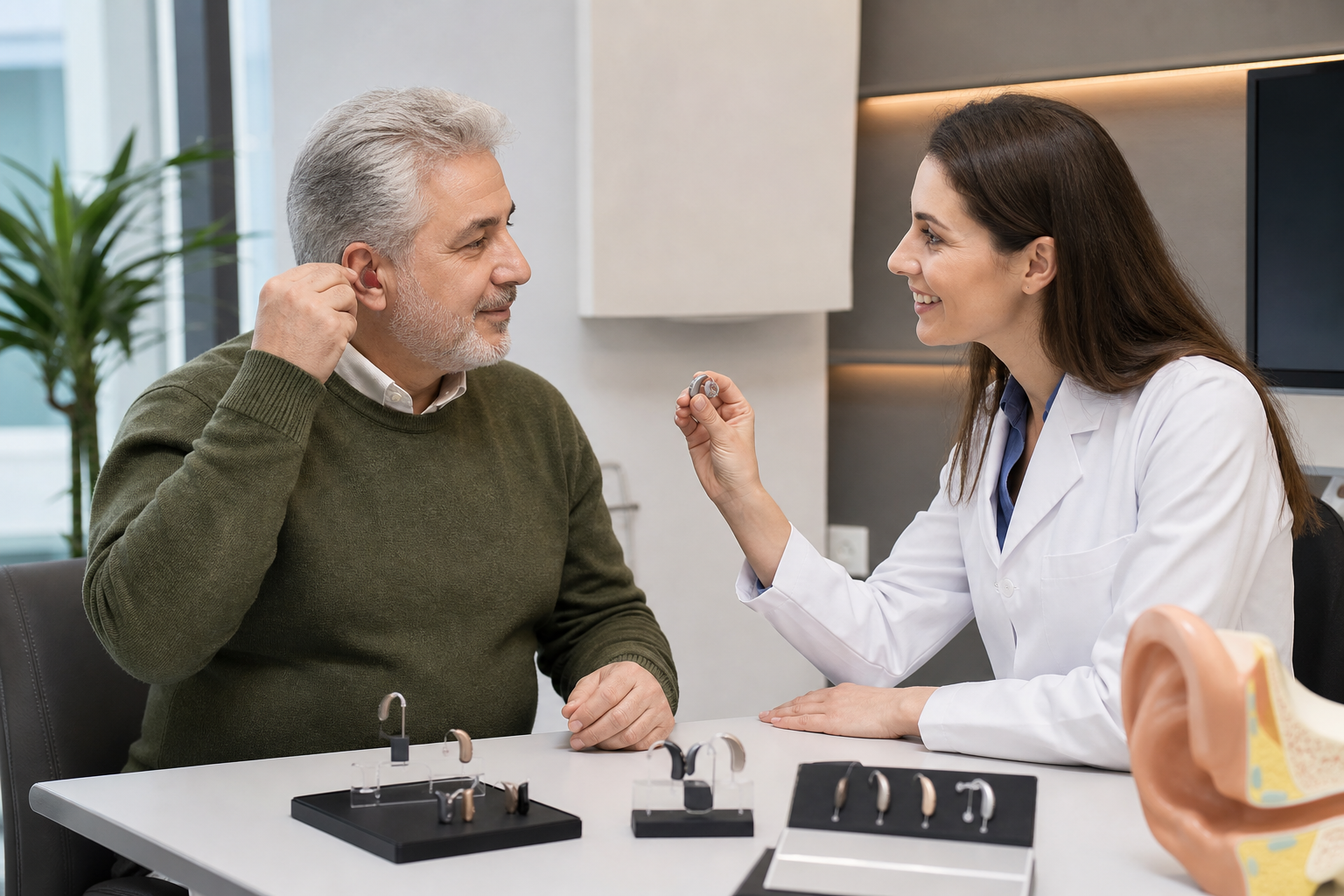 Hearing Aids
How to Choose a Hearing Aid
How do you choose a hearing aid? Testing, technology level, style, budget, and trial peri…
Read more →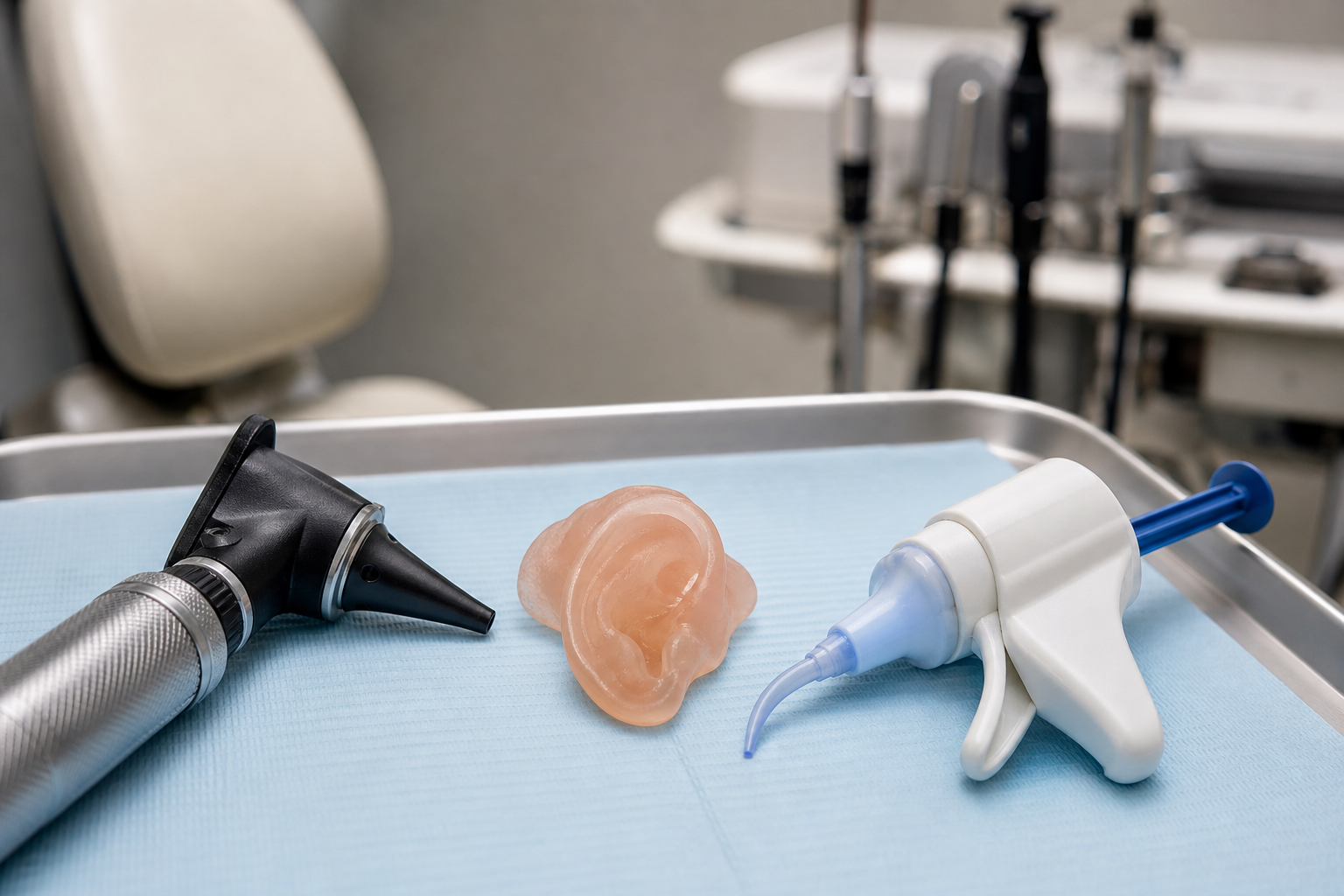 Hearing Aids
What Is a Custom Earmold and How Is It Made?
What is a custom earmold and how is it taken? A comprehensive guide to mold types, comfor…
Read more →Let us determine the type of device suitable for your ear structure by trying it out.