
Medically reviewed by Nokta İşitme Audiology Team (Audiologist) according to hearing health information standards.
There are many people who say "I should buy a rechargeable battery so I don't have to worry about batteries" as well as those who say "I have a spare battery in my pocket, my mind is at ease". They may both be right. Rechargeable hearing aids have become widespread in recent years; Battery powered models are still widely available. The key is which one fits your morning routine, dexterity and travel habits.
We put the two options side by side. Technology level or device type (in-ear / behind-the-ear) is secondary here; Let's clarify the power supply decision first.
How does a rechargeable hearing aid work?
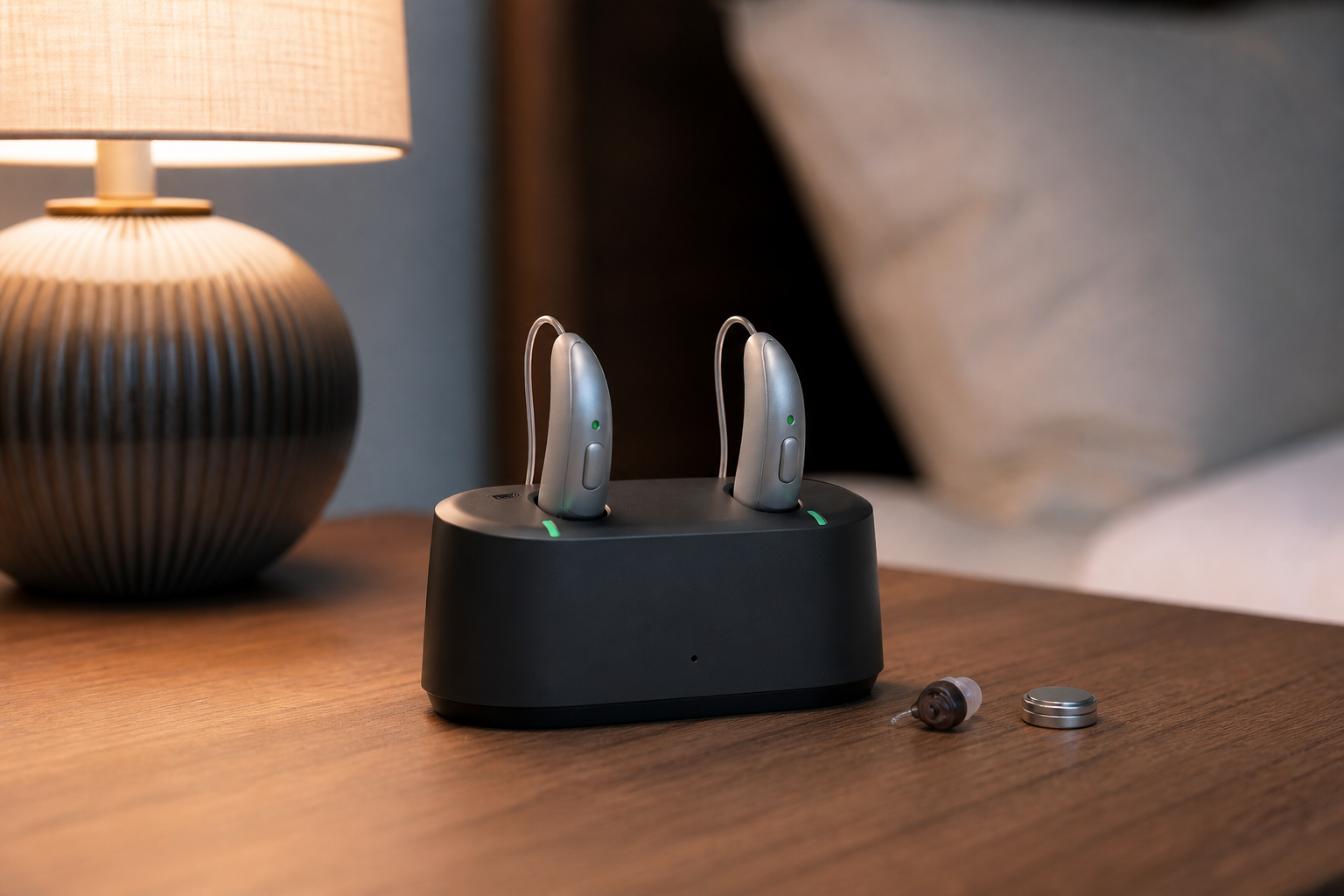
In rechargeable models, the lithium ion battery is embedded in the device. In the evening, you place the device in the charging station or charging box; You'll wake up in the morning with a full battery. No opening and closing of the battery cover during the day.
Most models promise full day use with 3–5 hours of charging. For those with fast charging, a 30-minute charge can provide a few hours of emergency use — handy if you forgot it before a meeting.
Daily routine of rechargeable device
The routine is simple: take it out, charge it, plug it in in the morning. But order is necessary. Our clients who skipped charging at night call saying "I was silent at noon". Once the habit is established, the question "Is the battery dead?" on the battery powered device is established. You will be free from control.
How does a battery-powered hearing aid work?
Battery models work with disposable zinc-air batteries. When the battery runs out, the cover is opened, the old battery is removed and the new battery is inserted. The process does not take more than a minute; However, it may be challenging if vision and manual dexterity are poor.
Battery life varies between 3–14 days. Bluetooth streaming, high power setting and cold weather shorten the time. Hearing aid battery selection and storage conditions directly affect performance.
Daily routine of battery operated device
Carrying a spare battery becomes a habit. Having a battery in your pocket provides reassurance during long weddings, travels or unexpected delays. When the battery dies, there is sudden silence; This is the biggest stress on the battery side.
Comparison table
| Feature | Charged | Battery operated |
|---|---|---|
| Daily preparation | Night charging | Battery check / replacement |
| Usage period | 16–30 hours (depending on model) | 3–14 days (per battery) |
| Annual battery cost | Low (electricity) | Medium – high |
| Environmental impact | Less waste | Regular battery waste |
| Dexterity requirement | Low | Medium (battery replacement) |
| Travel | Requires charging case/cable | Easy to carry spare batteries |
| Long-term maintenance | Battery replacement (service) every 4–5 years | Continuous battery pickup |
| Risk of sudden outage | If charging is forgotten | When the battery runs out |
| Model diversity | Large but not as big as battery operated | Too wide |
Pros and cons of the rechargeable device
Pros
- No intraday battery replacement
- No hassle of dealing with small batteries
- Battery costs are low in the long run
- Less disposable waste for the environment
- Reduced risk of swallowing in children (embedded battery)
Cons
- Night charging routine is a must; If you forget, ask the next day
- It is necessary to plan charging facilities for long trips
- Battery replacement and cost in service after 4–5 years
- Rechargeable options are limited in some compact in-ear models
Pros and cons of battery powered device
Pros
- Instant continue with backup battery
- Flexibility in environments without charging sockets
- Model and price range is very wide
- Battery replacement is quick (if skilled)
Cons
- Annual battery costs add up
- Battery waste is generated
- Risk of swallowing small batteries (children, dementia)
- Sudden silence when battery runs out
Daily life scenarios
Office and home routine
For someone who gets up at 7 in the morning and wears a device until 11 in the evening, a rechargeable model is usually sufficient. It is a good habit to check the battery level in the evening for those who make long calls via Bluetooth during the day.
Travel
For a weekend getaway, a rechargeable device + portable box is often enough. In a two-week camping or destination with uncertain charging facilities, a battery-powered device and a spare battery pack are more predictable.
Elderly users and caregiver support
For those with hand tremors or vision problems, charging at night may be easier than changing the battery. If the caregiver puts it on charge every evening, it makes sense. If the user is alone and does not follow the charging routine, batteries + regular caregiver control are also considered.
Cost: short and long term
The sticker price of a rechargeable device is sometimes slightly higher than its battery-powered equivalent. But purchasing dozens of boxes of batteries a year can accumulate in the range of 500-1500 TL (depending on battery type and usage) on the battery side. The total cost charged in a five-year perspective is often lower.
Also factor in the cost of a one-time service battery replacement. We discussed the technology level and cost of ownership in detail in the article Device price factors.
Maintenance differences
In both types, hearing aid cleaning has the same importance. In battery powered models, moisture and dirt accumulation in the battery compartment should be checked; In rechargeable models, if the charging contacts become dirty over time, charging problems may occur.
Keep the charging unit in a dry place, not in a damp bathroom. The lid gasket of the battery operated device should be checked regularly; Loose cover shortens battery life.
Which in which case?
| Status | Recommendation trend |
|---|---|
| Has a regular night routine | Charged |
| Frequent and long travel, uncertain charging | Battery operated |
| Risk of child or battery swallowing | Charged |
| Limited manual dexterity, caregiver support available | Rechargeable (easy to charge) |
| Very compact in-ear is requested | Battery operated (wide range of models) |
| Environmental sensitivity | Charged |
The table shows a trend; The final decision is made after the hearing test and trial.
Switchover: from battery to battery and vice versa
If you are not satisfied with your current device, changing the power supply alone will not create a miracle. But choosing resources that better suit your routine will reduce daily stress. The transition requires new programming and a few weeks of familiarization.
A client who switched from battery-powered to rechargeable said, "I got rid of carrying a battery stock." Another person, who switched from rechargeable to battery-powered, chose battery-powered because "I don't want to worry about charging when going to the village on the weekend." Both are the right decisions — for their own lives.
Conclusion
Rechargeable hearing aids offer daily practicality and long-term battery savings. The battery operated device provides flexibility and a wide range of models. Both are reliable; «Which is better?» The answer to the question "Which one suits your day?"
Don't decide without trying. If it is possible to try it with a charger for a week and with a battery for a different period, you will clearly see which one creates less friction in your routine. We can evaluate both options by Appointment.
Frequently asked questions
How long does a rechargeable hearing aid last?
Generally between 16 and 30 hours on a full charge, depending on model and usage. Bluetooth streaming, noisy ambient programs and high amplification shorten the time.
Will the rechargeable device be damaged if left to charge overnight?
Modern charging units have overcharge protection. However, a regular nightly charging routine is recommended for battery health.
Which battery is used in a battery powered device?
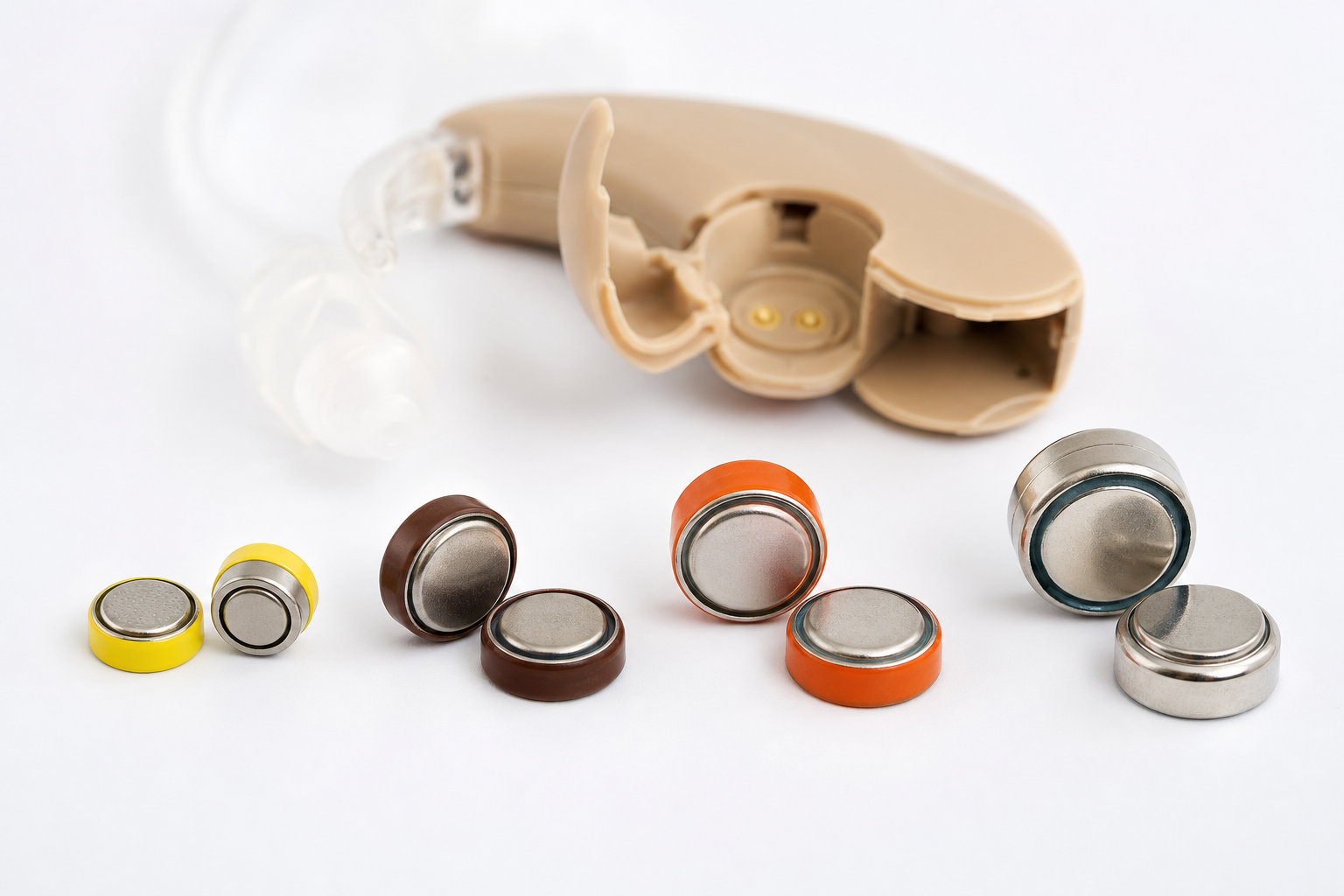
Zinc-air battery number 10 in small models, number 312 in medium size, number 13 or 675 in large BTE models. Do not use batteries other than the battery type specified in the device manual.
Is rechargeable or battery-powered practical when traveling?
For short trips, charging is usually sufficient. A portable charging case or USB cable is required for long trips. Carrying a spare battery in a battery powered device is an easy and quick solution.
When to replace a rechargeable battery?
The built-in lithium battery usually loses capacity after 4–5 years. Then the battery needs to be changed at an authorized service; It is not made at home.
Is the rechargeable device more expensive?
The starting price may be a little higher than the battery-powered model. Since there is no annual battery expense, the total cost may be similar or lower in the long run.
Which one is suitable for children?
Due to the risk of swallowing small batteries, models with rechargeable or locked battery covers are frequently preferred by children. The final decision should be made with an audiologist evaluation.
Kaynakça ve Referanslar
Bu makaledeki tıbbi bilgilendirmeler aşağıdaki güvenilir kaynaklara dayanmaktadır.
- Hearing Review — Rechargeable hearing aids market trends — Hearing Review
- IEC 60086 — Primary batteries — IEC
- Phonak — Rechargeable hearing solutions — phonak
 Device Care
Hearing Aid Battery Guide
Which battery size does your hearing aid use? Types 10, 312, 13, and 675, color codes, ba…
Read more → Hearing Technology
What Is a Bluetooth Hearing Aid and Does It Really Work?
How does a Bluetooth hearing aid connect to your phone and TV? Does it really help, and w…
Read more → Hearing Aids
How to Choose a Hearing Aid
How do you choose a hearing aid? Testing, technology level, style, budget, and trial peri…
Read more →Let's evaluate together the power supply suitable for your daily routine.