

Medically reviewed by Nokta İşitme Audiology Team (Audiologist) according to hearing health information standards.
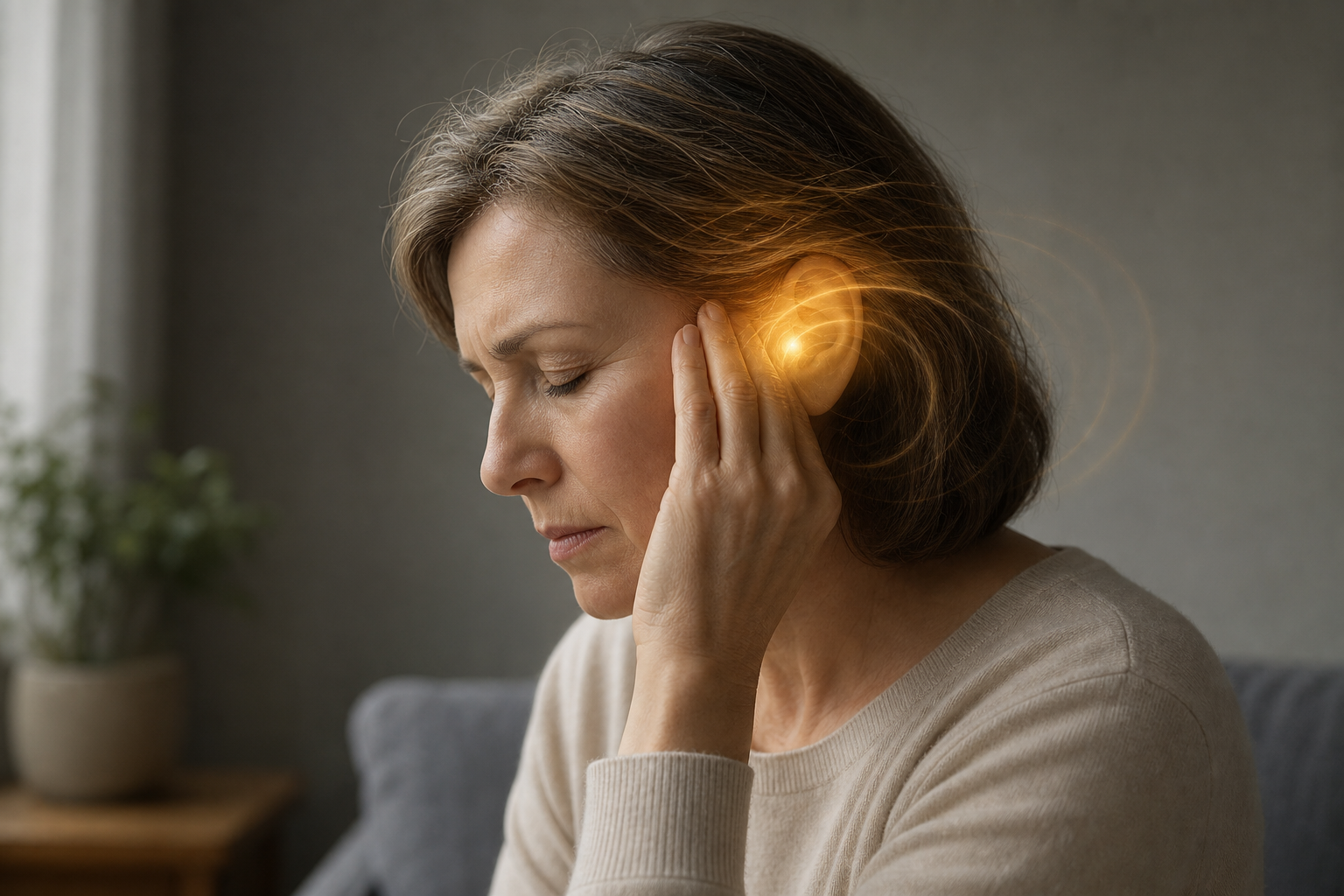
Ringing in the ears, that is, tinnitus, is the perception of sound heard in the ear or head and without an external sound source. It can be described as a bell, whistle, hum or buzz. Although this complaint, which affects millions of people in Türkiye, is often seen as a temporary disorder, it can seriously affect sleep, concentration and social life when it continues for a long time. Tinnitus assessment is the first and most important step taken to understand the nature of the complaint, measure hearing status, and determine appropriate management options.
In this guide, we explain in plain language how tinnitus is evaluated, which questionnaires are used, the role of hearing testing in this process, and the management options available. This process is carried out in a personalized and understandable manner in our Bozyaka and Yeşilyurt branches in Izmir, which offer tinnitus evaluation services.
What is Tinnitus and Why is Evaluation Required?
Tinnitus is a perception of sound that has no equivalent in the external environment. In some people, it is mild and intermittent; In some, it is continuous and intense. Although the cause of tinnitus cannot always be clearly determined, factors such as hearing loss, noise exposure, ear infections, certain medications and stress may play a role. For detailed information about Causes of tinnitus, you can also check out our related article.
Saying "pass" without evaluation is risky. Because tinnitus can sometimes be a sign of an underlying hearing loss or medical condition. Early evaluation allows both to measure the severity of the complaint and to initiate appropriate intervention in a timely manner. The Ministry of Health also emphasizes the importance of regular screening and early intervention in hearing health.
When Should Tinnitus Be Taken Seriously?
It is recommended that you make an appointment for evaluation in the following cases:
- If tinnitus continues for more than a week
- If the sound is one-sided and starts suddenly
- If accompanied by hearing loss, dizziness or earache
- If it interferes with sleep, work or social relationships
- If you develop symptoms of anxiety or depression
If you have one or more of these symptoms, you can start the evaluation process by making an appointment
Tinnitus Assessment Process Step by Step
A professional tinnitus evaluation usually consists of four main stages. Each stage forms the basis for the next and helps prepare a personalized management plan.
1. Preliminary Interview and Complaint Analysis
The evaluation begins with a detailed preliminary interview. Expert; It asks when tinnitus started, in which ear it is, the character of the sound (ringing, humming, whistling, etc.), its intensity, and at what time of day it is more noticeable. In addition, your hearing history, noise exposure history, medications you use and your general health condition are listened to.
During this meeting, we also discuss how tinnitus affects your daily life. For example, information is collected about sleep quality, work performance, television or phone use, and communication difficulties in social situations. This data also helps interpret the surveys to be used in the next steps.
2. Standardized Surveys
In tinnitus evaluation, questionnaires are used to measure the subjective dimension of the complaint. Hearing testing alone may not fully reflect the impact of tinnitus on quality of life; surveys fill this gap.
THI (Tinnitus Handicap Index) is one of the most widely used scales. It consists of 25 questions and evaluates the emotional, functional and catastrophic dimensions of tinnitus. The result is classified as a light, medium, heavy or very heavy handicap.
With VAS (Visual Analog Scale), the patient is asked to mark the severity of tinnitus on a line from 0 to 10. This method is fast and practical; It is used to monitor change, especially during follow-up appointments.
In some centers, TFI (Tinnitus Function Index) is also applied. This scale covers eight domains such as sleep, listening, concentration, emotional state, and social participation. Which survey will be used is determined according to the center's protocol and the person's needs.
Survey results alone do not make a diagnosis; however, it provides a valuable reference point for comparison before and after treatment. The scores obtained in the first evaluation allow the improvement to be measured in the controls performed in the following months.
3. The Role of Hearing Testing
Hearing testing is an integral part of tinnitus evaluation. Because there is a strong relationship between tinnitus and hearing loss. Many people notice tinnitus but may not be aware of the accompanying mild hearing loss.
During the hearing test, sounds of different frequencies and intensities are presented in a soundproof cabin. The results obtained are shown on a graph called audiogram. This graph reveals at which frequencies your hearing threshold increases.
The special importance of hearing testing in the evaluation of tinnitus is as follows:
- Understanding the relationship between the frequency of tinnitus and the profile of hearing loss
- Determining whether hearing aid use is appropriate
- Recognizing signs that indicate underlying ear disease
- Following up treatment results with objective data
Hearing test page. Our article How to do a hearing test explains the process step by step.
4. Evaluation of Results and Guidance
After all the data is collected, the specialist evaluates the findings with you. Survey scores, hearing test results, and your history are considered together. If necessary, referral to specialists such as an ENT physician, neurologist or psychologist is recommended.
At the end of the evaluation, a special management plan is created for you. This plan; It may include options such as a hearing aid trial, sound therapy, lifestyle recommendations, or medical follow-up. The important thing is to adopt an individual approach that suits the needs of the person rather than a single "standard solution".
The following questions are answered when creating the plan: In which environments is tinnitus most disturbing? At what frequencies does hearing loss occur? At what level is the survey score? What are the daily living activities? This holistic view brings to the agenda combined treatment options without adhering to a single method.
Relationship Between Hearing Test and Tinnitus
The link between tinnitus and hearing loss has been supported by scientific research for years. When the auditory system is damaged, the brain tries to compensate for the missing sound information. During this process, some nerve pathways may become overactive and the perception of tinnitus may occur.
For this reason, the use of hearing aids relieves tinnitus in many people. The device reduces the brain's effort to "fill the gap" by amplifying external sounds. However, hearing loss may not be present in every tinnitus case; In this case, different management strategies come into play.
Hearing testing is also used for frequency matching of tinnitus. In some advanced devices, the tinnitus mask feature can reduce discomfort by producing a sound close to the person's tinnitus frequency. The suitability of such solutions is based on test results.
Tinnitus Management Options
There is no "single miracle cure" for tinnitus. However, there are many management methods based on scientific evidence. The options that may be offered to you after the evaluation are as follows:
Hearing Aid and Sound Support
If there is accompanying hearing loss, hearing aid can both improve hearing and reduce tinnitus. Some devices have a built-in tinnitus mask or soothing sound programs. These features are offered as standard or optional in current models of manufacturers such as Phonak and Oticon.
Device selection and programming process should be made according to the person's hearing profile and tinnitus character. The trial period is the most reliable way to test the suitability of the device in terms of both hearing and tinnitus.
Sound Therapy and Masker Devices
Voice therapy aims to partially or completely mask tinnitus with external sounds. White noise, nature sounds or special frequency sounds can be used. While mobile applications or desktop sound generators may be sufficient for some people, behind-the-ear mask devices may be more effective for others.
The goal of sound therapy is not to "eliminate" tinnitus, but to reduce perceived discomfort and change the brain's response to tinnitus. This process requires patience and regular practice.
Lifestyle and Cognitive Approaches
Stress, fatigue, caffeine, alcohol and sleep disorders can increase tinnitus. Lifestyle adjustments such as regular sleep, relaxation exercises and noise protection make a difference for many people.
Psychological approaches such as cognitive behavioral therapy (CBT) and acceptance and commitment therapy (ACT) focus on changing the emotional response to tinnitus. These methods can be recommended especially for people with severe handicap scores.
Medical Evaluation and Medication
In some cases, treating underlying medical causes can also relieve tinnitus. Earwax, middle ear problems or conditions related to vascular structure should be evaluated. Drug treatment is not appropriate in every case and must be applied with the recommendation of a physician.
Follow-up Process After Evaluation
Tinnitus management is often an ongoing process, not a one-time intervention. After the initial evaluation, regular follow-up appointments are scheduled. At these appointments, survey scores are reapplied, hearing status is checked, and the management plan is updated when necessary.
If you are using a device, maintenance and repair services are also part of regular monitoring. A faulty or dirty device can have a negative impact on both hearing and tinnitus.
It is important that family members are also involved in the process. Tinnitus is an invisible complaint; Having the close circle understand the situation prevents the patient from feeling alone and increases compliance with treatment.
Additional Tests Used in Tinnitus Evaluation
Beyond the basic evaluation, additional tests may be requested in some cases. These tests are not routinely performed on every patient; The decision is made according to the nature of the complaint and the initial findings.
Tinnitus matching test attempts to measure the frequency and intensity of the tinnitus heard by the patient. This information is used to adjust the tinnitus program on the masker or hearing aid. The Minimal masking level test determines the lowest external sound level that completely covers the ringing.
In addition to the hearing test, speech audiometry can be applied. This test measures the ability to understand speech at different noise levels. People experiencing tinnitus generally have more difficulty understanding speech in noisy environments; This test reflects real performance in daily life.
Ear examination is also part of the evaluation. Accumulated wax in the ear canal, fluid in the middle ear, or damage to the eardrum can increase tinnitus and present treatable causes. When necessary, referral is made to an ENT physician.
Tinnitus and Quality of Life
Tinnitus Handicap Index scores numerically indicate the impact on quality of life. People with mild handicap mostly manage with lifestyle adjustments and information. At medium and severe handicap levels, a more comprehensive intervention plan is required.
Sleep disorder is the most common problem associated with tinnitus. In the quiet of the night, tinnitus becomes more noticeable and makes it difficult to fall asleep. Light background noise in the bedroom (fan, white noise app) makes a difference for many people. Sleep hygiene recommendations—regular bedtimes, limiting caffeine, reducing screen use—are also included in the post-assessment plan.
Tinnitus manifests itself in different ways in business and social life. Fatigue may be experienced due to difficulty concentrating in the office environment, distraction in meetings, or constant noise perception. Understanding and managing these impacts completes the "operational" dimension of evaluation.
Home Management Tips
Simple methods that can be applied at home before or after a professional evaluation can alleviate discomfort. Background noise (fan, white noise application) can mask tinnitus. Limiting caffeine and alcohol consumption, maintaining regular sleep hours, and stress management techniques (breathing exercises, light walking) make a difference for many people.
These methods do not replace tinnitus evaluation; however, it can be administered while waiting for an evaluation appointment or in addition to the treatment plan. If your complaint started suddenly or there is accompanying hearing loss, it is recommended that you make an appointment instead of waiting with home methods.
Regular follow-up after tinnitus evaluation is also important. Initial survey scores provide a reference point; A decrease in scores at monthly or quarterly check-ups indicates that the treatment is working. Impatience is common, but most management methods begin to work within a few weeks.
Do not hesitate to ask your questions during the evaluation process. Misinformation about tinnitus is common on the internet; The information you receive from reliable sources and experts helps you make the right decisions. Our Tinnitus assessment service is designed to answer these questions and draw a special road map for you.
If tinnitus reduces your quality of life, you are not alone and you are not helpless. It is possible to control your complaint with scientific evaluation and personalized management plan. The first step is to get a professional evaluation.
Thanks to surveys such as THI, VAS and TFI, the effect of tinnitus becomes measurable. This numerical data makes it easier for both you and the specialist to track progress. Comparison of scores before and after treatment objectively shows which method is suitable for you.
Hearing test is the cornerstone of this process. Understanding the connection between tinnitus and hearing loss is key to creating the right management plan. General recommendations given without test results cannot be personalized and will not give effective results.
Tinnitus Evaluation in Izmir
As Nokta İşitme, we offer comprehensive tinnitus evaluation in our Izmir Bozyaka and Yeşilyurt branches. Period; It includes preliminary interview, standard questionnaires, professional hearing test and personalized management recommendations. You can get general information about our service on our Tinnitus page, and contact us through our contact channels.
If tinnitus reduces your quality of life, you do not have to accept it. An early and accurate assessment is the first step to exploring management options that are right for you. Our articles on Causes of tinnitus and first signs of hearing loss also discuss the subject in a broader context.
This content is for general information purposes; Expert evaluation is absolutely necessary for diagnosis and treatment decisions.
Frequently asked questions
How long does a tinnitus evaluation take?
A basic tinnitus evaluation usually takes 45–60 minutes. This period includes preliminary interview, hearing test, survey application and announcement of the results. If additional examination or expert guidance is required, the period may be extended.
Is preparation required for a tinnitus evaluation?
No special preparation is required. Ear canal cleaning and a list of medications you use may be helpful. Staying away from noisy environments and arriving well-rested increases the comfort of the evaluation.
Does tinnitus always occur with hearing loss?
No. Tinnitus can also be experienced without hearing loss. However, many people have both conditions together. Therefore, hearing testing is a standard step in the evaluation of tinnitus.
What surveys are used for tinnitus?
Scales such as THI (Tinnitus Handicap Index), VAS (Visual Analog Scale) and in some centers TFI (Tinnitus Function Index) are used. These surveys help quantify the impact of tinnitus on daily life.
Can tinnitus be treated?
There is no single universal treatment for tinnitus. However, hearing aids, voice therapy, cognitive behavioral approaches and lifestyle adjustments can reduce complaints in many people. After the evaluation, a personalized plan is created.
Which specialist performs tinnitus evaluation?
The evaluation is usually done by an audiologist or hearing specialist. When underlying medical causes are suspected, referral to specialists such as an ENT physician or neurologist may be recommended.
Kaynakça ve Referanslar
Bu makaledeki tıbbi bilgilendirmeler aşağıdaki güvenilir kaynaklara dayanmaktadır.
- Sosyal Güvenlik Kurumu — Resmi web sitesi — SGK
- T.C. Sağlık Bakanlığı — Sağlık bilgilendirme — Sağlık Bakanlığı
- NIH — Tinnitus (National Institute on Deafness) — NIH
 Tinnitus
What Causes Tinnitus?
What causes tinnitus? Its link to hearing loss, common triggers, and when to see a specia…
Read more →Get a free initial evaluation for a tinnitus assessment that's right for you