
Medically reviewed by Nokta İşitme Audiology Team (Audiologist) according to hearing health information standards.
Hearing loss often progresses quietly. Over the years habits change: the TV volume goes up, crowded places are avoided, and phone calls get shorter. While a person may assume this is a natural part of aging, the early signs of hearing loss may already be settling into daily life. Recognizing them early is a critical step toward evaluation at the right time and appropriate solutions when needed.
This guide explains the early signs of hearing loss, clues family members may notice, the link with tinnitus, and when you should have a hearing test. It is written especially for adults aged 45–75 and for relatives aged 30–55 who are monitoring a parent’s hearing health.
Why Is Hearing Loss Noticed Late?
The hearing system is exposed to thousands of sounds every day. The brain tries to fill in missing sounds, so a person may not notice the loss immediately. For example, silence in high frequencies makes it harder to distinguish consonants in speech (such as s, f, and t). The person may think “everyone is mumbling,” when the issue is not the other person’s speech but their own hearing profile.
Adaptation is strong in slowly progressive hearing loss. Background noise that felt bothersome a year ago may gradually be accepted as “normal.” As we emphasize in our article on hearing loss in older adults, this can increase the risk of social withdrawal and isolation. Recognizing early signs is the first line of defense against that cycle.
The brain’s ability to compensate
The brain completes sentences by guessing missing frequencies. That ability helps in the short term, but over time it leads to listening fatigue. Saying “my ears are tired” in the evening can be a common reflection of early hearing loss.
Early Signs of Hearing Loss: Clues in Daily Life
No single sign confirms a diagnosis, but if several appear together, evaluation should be considered. The table below summarizes common early signals.
| Sign | What it may mean | When to pay attention |
|---|---|---|
| Constantly turning up the TV or radio | Reduced hearing in high frequencies | When family members say it is “too loud” |
| Unable to follow conversation in crowds | Difficulty selecting speech in noise | In restaurants, weddings, or meetings |
| Preferring one ear on the phone | One-sided or asymmetric loss | When you repeatedly need to use the same ear |
| Saying “what?” more often | Missing softly spoken words | Asking for repetition in everyday conversation |
| Difficulty hearing women’s and children’s voices | Loss of high-frequency sensitivity | Especially with clearly articulated voices |
| Ringing or humming in the ears | Tinnitus; may be linked to hearing loss | When it becomes more noticeable in quiet settings |
TV volume and family feedback
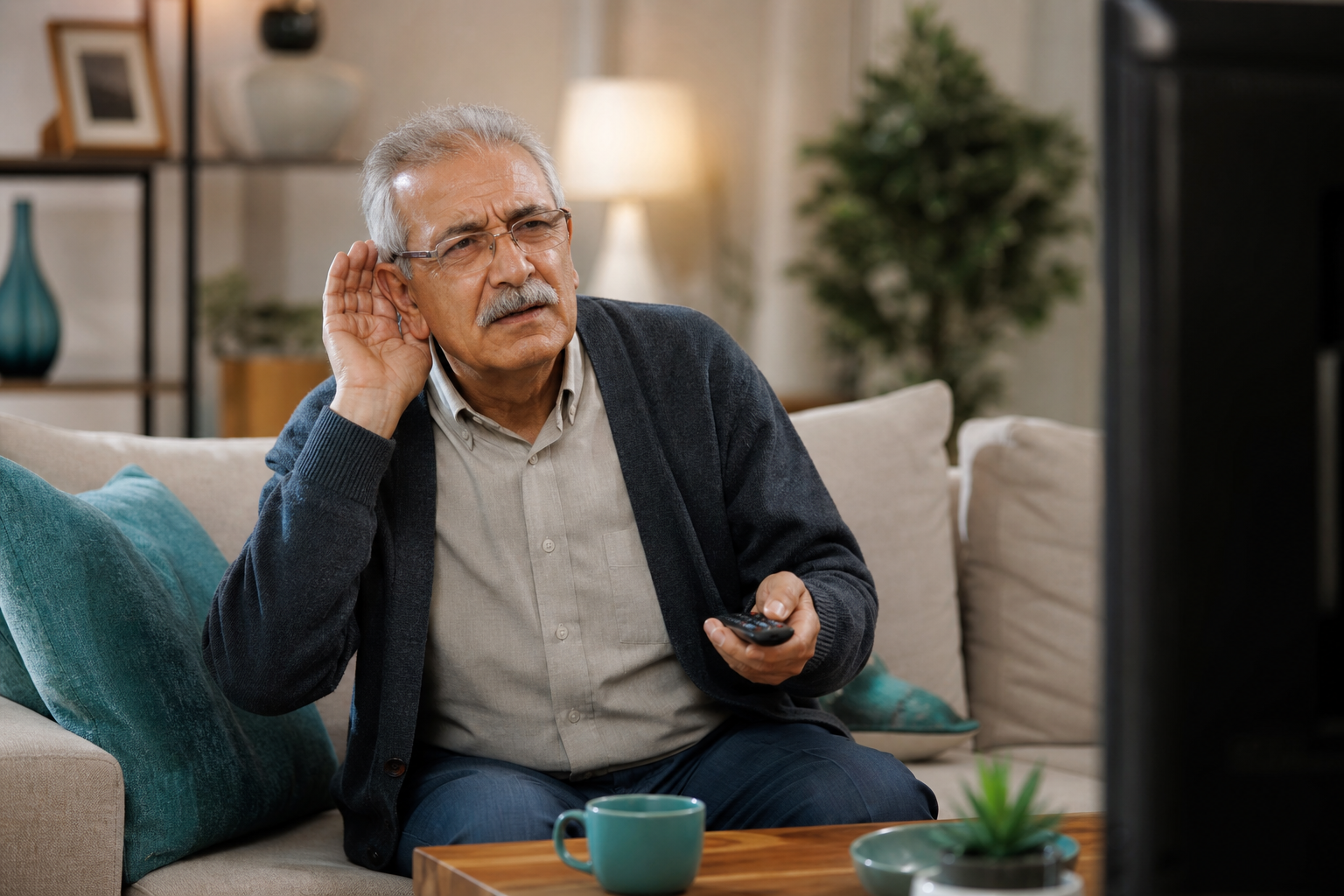
Turning up the television is one of the most frequently noticed early signs of hearing loss. The person finds a level that feels “normal” to them, while others in the home say they can hear it from the other end of the room. Without an objective measurement, this mismatch can turn into an argument. A professional hearing test turns the debate into data: an audiogram shows clearly which frequencies are heard and by how much.
Speech difficulty and social withdrawal
In crowded dining settings, supermarkets, or on buses, conversations blend together. A person with hearing loss may speak less for fear of misunderstanding. Over time, avoiding social gatherings, not answering the phone, or sitting in the back row at meetings can become a habit. These behavior changes may reflect the psychological impact of a sensory problem.
When loved ones say “you’ve been quieter lately,” that is an easy-to-miss but important sign among the early symptoms of hearing loss. In socially active cities such as Izmir, wind and background noise at outdoor cafés and seaside walks can make symptoms more obvious.
Tinnitus and Its Link to Hearing Loss
Tinnitus is a humming, whistling, or buzzing sensation felt in the ear or head. It does not always mean hearing loss on its own, but the two conditions often appear together. Tinnitus after noise exposure or with age may indicate that the hearing system is under stress.
If you have tinnitus, you can review the general information on our tinnitus page and learn about our tinnitus assessment service. A hearing test is also performed during evaluation, because linking tinnitus severity with hearing thresholds helps shape the care plan. We discuss possible causes in detail in our article Why does ringing in the ears occur?
When is tinnitus considered urgent?
Same-day medical evaluation is needed if tinnitus begins with sudden hearing loss, is one-sided and intense, or is accompanied by balance problems. With slowly progressive, mild tinnitus, a planned hearing and tinnitus assessment may be sufficient.
For Family Members: Recognizing Someone Else’s Hearing Loss
The early signs of hearing loss are often noticed first by a spouse, child, or sibling. The person may become defensive: “I hear fine; you’re shouting.” That reaction may come from embarrassment or resistance to change. The most constructive step for loved ones is to suggest a shared solution instead of using blaming language.
For example, saying “Mom, let’s arrange a hearing check for you—just to get information” is much more effective than saying “you can’t hear.” Booking an appointment or visiting our Bozyaka or Yeşilyurt branches turns the process into a concrete step.
Communication with children and grandchildren
Children’s higher-pitched voices are especially challenging for grandparents with high-frequency loss. The sentence “Grandpa doesn’t listen to me” can create vulnerability within the family. Early evaluation also helps preserve bonds across generations.
Is It Age-Related Hearing Loss or Something Else?
Presbycusis (age-related hearing loss) is common after age 50, but not every hearing problem is explained by aging. Ear infection, earwax buildup, acoustic trauma, certain medications, or cardiovascular disease can also affect hearing.
That is why, when signs appear, evaluation is needed rather than simply telling yourself “I’m getting old.” Current public information on hearing health and preventive measures is available from Turkey’s Ministry of Health. Referral to an ENT physician when necessary is part of hearing center assessment.
When Should You Have a Hearing Test?
A hearing test should be considered if one or more of the following apply to you:
- Symptoms have continued for more than six weeks
- Communication quality at work or in social life has declined
- Family members are giving repeated feedback
- Tinnitus is present
- You have worked in a noisy environment for many years
For detailed information about the test process, read our article How is a hearing test performed? At Nokta İşitme hearing tests, the preliminary consultation, audiometry, and results explanation are planned as one whole; there is no high-pressure sales approach.
What happens during a hearing test?
In a sound-treated room, tones at different frequencies and intensities are presented through headphones. Your hearing thresholds are measured and an audiogram is created. The process usually takes 30–45 minutes. We explain the technical details in plain language in our article What is an audiometry test?
Benefits of Early Intervention
When the early signs of hearing loss are ignored, the brain adapts to missing sounds; this is called auditory deprivation. Untreated loss over a long period can make it harder to understand speech and distinguish sounds. Evaluation in the early stage—and hearing aid solutions when needed—make it easier for the brain to adapt to new sounds.
A hearing aid is not always the first step. With mild loss, regular monitoring may be enough; with moderate to severe loss, a device may be recommended. The decision is made after test results and your lifestyle are evaluated together. We collected what to consider in a separate guide: Choosing a hearing aid.
Cognitive health and social connection
Research suggests that untreated hearing loss may be associated with social isolation and increased cognitive load. Regular communication is important for mental vitality. Acting when the first signs of hearing loss appear protects not only the ears but also quality of life.
Early Signs of Hearing Loss: Is There a Difference Between Men and Women?
Hearing loss occurs in both sexes, but the way signs are noticed can differ. In men, high-frequency loss linked to noisy work environments may appear earlier. In women, changes in hearing thresholds after menopause have been reported. In both cases, early signs are similar: asking for repetition, missing high-pitched sounds, and struggling in noisy environments.
What matters is not gender but how long symptoms last and how they affect daily life. If hearing difficulty lasts longer than six weeks or is increasing, evaluation should not be delayed. If there is a family history of hearing loss, annual check-ups can begin earlier.
Noise Exposure and Early Warning Signs
Exposure to factories, construction, farm machinery, or loud music for long periods can bring on the early signs of hearing loss regardless of age. Noise-induced loss usually begins at 3000–6000 Hz, which makes consonants in speech harder to distinguish.
Listening to music at high volume with headphones carries similar risk. Even in younger and middle-aged adults who feel “my hearing is fine,” audiometry can reveal hidden high-frequency loss. Using protective earwear and limiting sound exposure can slow progression of existing signs.
Hearing protection at work
Regular use of protective equipment provided by the employer in noisy workplaces is both a legal right and a health measure. If you feel humming in the ears or temporary hearing reduction after work, that may indicate the hearing system has been overloaded.
Hearing Loss and Cognitive Load
Untreated hearing loss can create extra load on the brain. Constant focus to fill in missing sounds is tiring; this is called listening fatigue. Exhaustion in the evening is especially common in settings that require long listening, such as meetings, family meals, or medical appointments.
When the early signs of hearing loss are recognized and evaluated, that load can be reduced. A hearing aid is not needed in every case, but the right amplification makes listening easier for the brain again. We also discuss the risk of social isolation in our article on hearing loss in older adults.
Early Signs of Hearing Loss and Communication Quality
Hearing loss is not only weak perception of sound; distortion of speech meaning is also a clear sign. Answering “yes” or “okay” to close a conversation is a common way to hide how many sentences were not understood. That habit prevents conflict in the short term but can lead to misunderstandings and loss of trust over time.
Asking for instructions to be repeated at work, taking incomplete meeting notes, or struggling with customer service calls can also count among the early signs of hearing loss. Withdrawal from social activities after retirement should not be interpreted only as lack of motivation.
Phone and digital communication
Sound quality on mobile phone calls is lower than face-to-face conversation. People with hearing loss may switch to speaker mode, prefer video calls, or shift to messaging. These adaptations do not diagnose hearing loss on their own, but if they form a lasting pattern, evaluation should be considered.
Early Signs of Hearing Loss: When Is It Normal and When Is It Not?
Mild high-frequency reduction can occur with age, but a change that clearly affects daily communication should not be accepted as “normal.” You can ask yourself: In the last six months, how often have you turned up the TV? Has how often you ask people to repeat themselves increased? Do you notice humming in quiet settings?
If you answer yes to these questions, it makes sense to plan professional evaluation. The test is painless, requires no preparation, and results are usually shared the same day.
SGK and Hearing Health
In Turkey, hearing aid support and health service coverage may be updated over time. For current regulations and application conditions, we recommend checking official sources from the Social Security Institution (SGK). At Nokta İşitme, the process is handled transparently; information about tests and device options is provided during the preliminary consultation.
Hearing Assessment in Izmir
You can book an appointment for hearing assessment at our Izmir Bozyaka and Yeşilyurt branches. Both centers have sound-treated test rooms, audiometry equipment, and an experienced team. You can reach us by phone or form on our contact page.
The early signs of hearing loss are not something to be ashamed of; they are a manageable health issue. Turning up the TV, missing conversation in crowds, or feeling ringing in the ears are natural ways of saying “something is changing.” When you notice these signs, the most valuable step is to plan professional evaluation rather than delay.
Once your hearing profile is clear, next steps—monitoring, device trial, programming, or a maintenance plan—are shaped together. Acting early offers a more comfortable listening experience in the long term.
Common Practical Questions
Can the early signs of hearing loss start in one ear?
Yes. One-sided hearing difficulty may appear as preferring one ear on the phone or being unable to locate sound direction. Sudden one-sided onset may require urgent medical evaluation; with slowly progressive one-sided loss, testing is still recommended.
Do symptoms change seasonally?
Allergic rhinitis or sinusitis can temporarily affect hearing through a feeling of fullness in the ear. If symptoms are persistent and recurring, permanent hearing loss beyond allergy should also be considered.
Can hearing loss be linked to depression?
Social withdrawal and communication difficulty can affect mood. Improvements in quality of life have been reported among people who receive hearing support. Even if symptoms feel psychological, hearing evaluation is recommended first.
Can medications affect hearing?
Some antibiotics, chemotherapy drugs, and high-dose pain relievers can be ototoxic. If you use medication long term and early signs of hearing loss appear, share this with your physician and hearing specialist.
Frequently asked questions
At what age do the first signs of hearing loss appear?
Hearing loss can occur at any age, but signs are noticed more often after age 45. Early signals may include difficulty separating speech in noisy places, constantly turning up the television, and hearing phone calls better in one ear.
Does hearing loss come on suddenly or gradually?
Most hearing loss develops slowly and gradually, so a person may not notice it for a long time. Sudden hearing loss can be a medical emergency and requires same-day evaluation. With gradual loss, regular check-ups and a hearing test are recommended.
Is ringing in the ears a sign of hearing loss?
Tinnitus does not always mean hearing loss on its own, but the two often occur together. If hearing has declined especially in high frequencies, ringing may become more noticeable. Tinnitus assessment should be planned together with a hearing test.
My family says I have a hearing problem but I do not notice it. What should I do?
Signs noticed by people close to you may appear before you recognize them yourself. Instead of becoming defensive, the best step is to have a professional hearing test. The results provide a clear picture and reduce unnecessary worry.
When do hearing loss symptoms require urgent evaluation?
Sudden hearing loss, a rapid one-sided drop, hearing loss with ear pain and fever, dizziness and balance problems, or discharge from the ear may require urgent medical evaluation. In these cases, an ENT physician should be seen first.
How soon should I get tested after noticing signs of hearing loss?
If symptoms last longer than a few weeks or affect daily life, there is no need to wait. Early evaluation makes it easier to manage progressive loss and reduces the risk of social isolation. You can schedule an assessment quickly by booking an appointment.
Kaynakça ve Referanslar
Bu makaledeki tıbbi bilgilendirmeler aşağıdaki güvenilir kaynaklara dayanmaktadır.
- Sosyal Güvenlik Kurumu — Resmi web sitesi — SGK
- T.C. Sağlık Bakanlığı — Sağlık bilgilendirme — Sağlık Bakanlığı
- WHO — Deafness and hearing loss (Fact sheet) — Dünya Sağlık Örgütü
 Hearing Tests
How Is a Hearing Test Performed?
How is a hearing test done? Preparation for first-time visitors, test steps, reading your…
Read more → Hearing in Older Adults
Signs of Hearing Loss in Older Adults
What are the signs of hearing loss in older adults? Family support, denial, and the benef…
Read more →Get a free preliminary assessment for a hearing evaluation suited to you