

Medically reviewed by Nokta İşitme Audiology Team (Audiologist) according to hearing health information standards.
As we get older, hearing loss silently enters the lives of many people. Turning up the TV volume, asking "what did you say?" in conversations. saying or holding the phone to one ear may seem trivial at first. However, when left untreated, hearing loss is not limited to the ear; It can also have effects on social isolation, depression, and cognitive health. Hearing loss in the elderly is one of the most common health problems in Turkey, and early detection directly affects the quality of life.
In this guide, we discuss the symptoms of hearing loss in elderly individuals, the role of families, the denial process, and the benefits of treatment. This process is carried out with a patient and understanding approach in our Bozyaka and Yeşilyurt branches in Izmir, which offer hearing test and device consultancy.
Why is Hearing Loss So Common in the Elderly?
One in three people over the age of 65 experiences significant hearing loss. The medical name for this condition is presbycusis and it is associated with the natural wear and tear of hair cells in the inner ear with age. Sound signals cannot be transmitted clearly enough to the brain, and especially high-frequency sounds — women's and children's voices, letters "s", "f" — are lost first.
Apart from age, the following factors can also accelerate hearing loss:
- Working in a noisy work environment for years
- Chronic ear infections
- Systemic diseases such as diabetes and high blood pressure
- Ototoxic (ear-harmful) effects of some drugs
- Genetic predisposition
Ministry of Health data, hearing health is one of the priority areas that require regular control in old age. However, many elderly people avoid having an evaluation, seeing hearing loss as a "normal part of aging".
Symptoms of Hearing Loss in the Elderly
Hearing loss is not always sudden and obvious. It is a process that develops slowly over years. If you notice several of the following symptoms or observe them in an elderly relative, it may be time for evaluation.
Communication Difficulties
Having difficulty distinguishing conversations in crowded environments is one of the most common complaints. Communication becomes seriously difficult, especially in places where there is intense background noise, such as a restaurant, family gathering or grocery store. Elderly individuals may often make comments such as "everyone talks over each other" or "people don't talk properly anymore."
Phone calls are also difficult. Voice transmission over the phone is more limited than in face-to-face conversation; Hearing loss makes this difference apparent. Some seniors hold the phone to only one ear or switch to speakerphone mode.
Television and Radio Audio
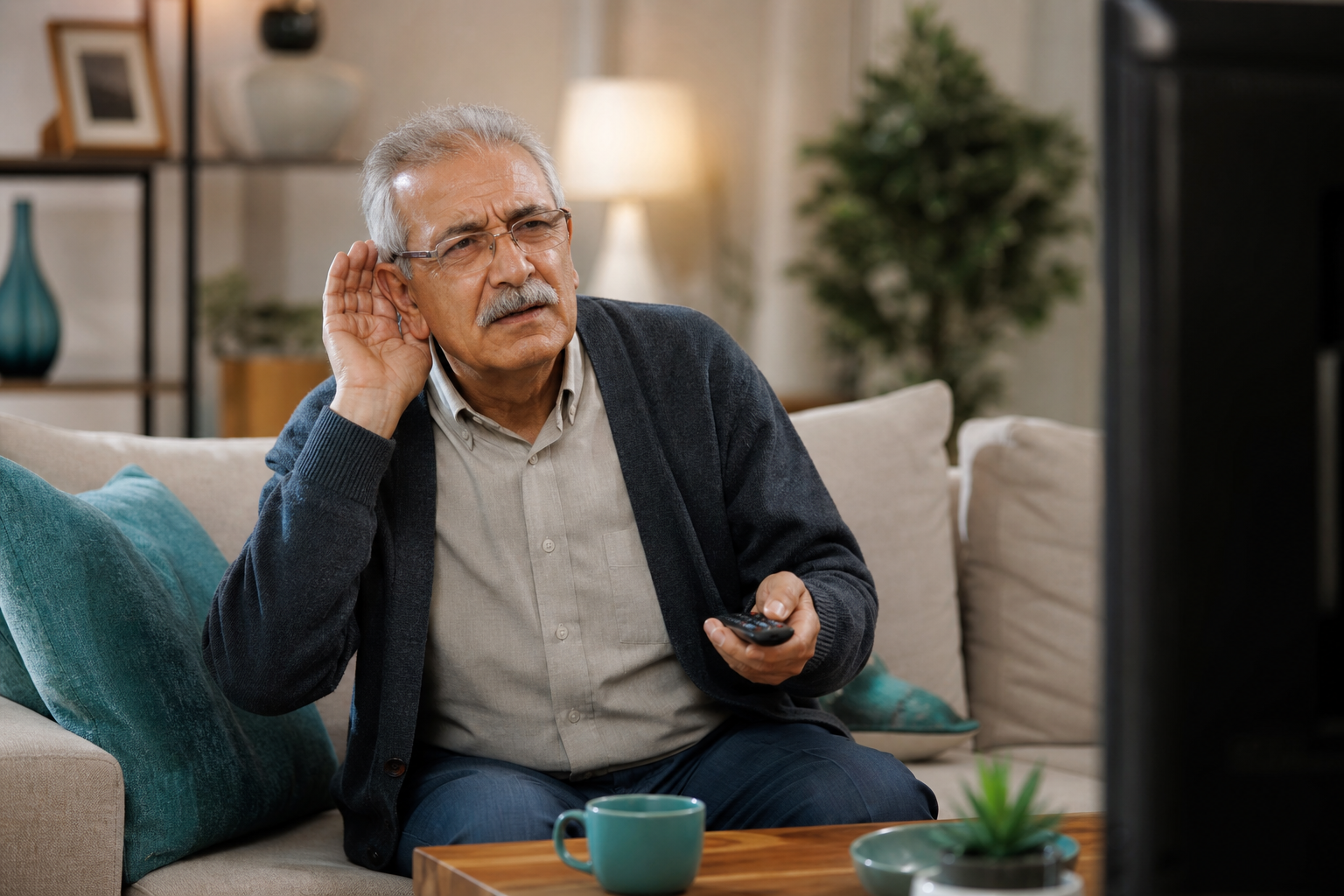
Constantly increasing the television volume is the symptom most frequently noticed by family members. The sound level that the elderly individual finds normal for himself may be disturbing for others in the room. This situation may also lead to tensions within the home.
Social Withdrawal
Many elderly individuals with hearing loss gradually withdraw from social environments. Not being able to participate in conversations, being misunderstood, or constantly asking for repetition can feel embarrassing. This withdrawal increases the risk of depression and loneliness.
Balance and Steering Problems
The auditory system is also associated with balance. Hearing loss can increase the risk of falls. Especially the complaint "I can't understand which direction it's coming from" may indicate the difference in hearing between the two ears.
Cognitive Symptoms
Untreated hearing loss can be perceived as a sign of memory problems or dementia. In fact, the person cannot respond or follow the topic because he does not hear. Professional evaluation is essential to make this distinction.
First signs of hearing loss Our article discusses this issue in detail for all age groups.
The Role of the Family: How to Support?
Family support is critical in helping an elderly relative cope with hearing loss. However, this support must be provided in the right way; Otherwise, it may lead to a defensive attitude.
Communicate Correctly
When talking to your elderly relative, make sure they look at your face. Speak slowly and clearly; Speaking loudly distorts the sound and reduces intelligibility. Avoid talking in noisy environments. Talk about important issues in a calm environment, sitting down.
Use Concrete Examples
Instead of saying "Your hearing is bad", share concrete observations such as "You turned the television on to 40 last night, we were disturbed." This approach is informative, not accusatory, and facilitates the acceptance process.
Go to an Appointment Together
Accompanying elderly individuals who are reluctant to go alone makes a big difference. You can also assist with the creating an appointment process. Framing the test as an "ear check" or "routine health screening" reduces resistance.
Be Patient
Accepting hearing loss can take time. Pressuring can be counterproductive. Take small steps: first test, then trial, then device decision.
Harmonise the Environment
Simple adjustments can be made at home: such as turning on television subtitles, changing the doorbell to a visual alert model, using video calling during phone calls. These steps both increase security and facilitate communication.
The Denial Process: Why Don't They Say "I Don't Hear It"?
It is very common for older individuals to not accept their hearing loss. There are several psychological and social reasons behind this situation.
Association with Aging
The thought "I'm old, it's normal" is the strongest reason for denial. The knowledge that hearing loss is a treatable condition is not widespread enough. However, modern hearing aids can dramatically improve quality of life.
Fear of Stigma
The concern that wearing a hearing aid will be seen as "old" or "disabled" is especially strong in individuals with active social lives. Today, small and almost invisible device options largely address this concern.
Cost Concern
The perception that hearing aids are expensive postpones the evaluation. However, SGK contribution significantly alleviates the financial burden. Price segments and the SGK process are explained in detail in our Hearing aid prices guide.
Gradual Loss
As hearing gradually decreases, the brain gets used to the loss. The person may not be aware that he or she is not truly "hearing." In this case, the role of family members observing from outside becomes even more important.
Evaluation and Testing Process
Hearing evaluation in elderly individuals requires special patience and approach. Hearing test process usually takes 30–45 minutes and is painless.
During the test, headphones are worn in a sound-insulated cabin and sounds of different frequencies are listened to. The elderly person is asked to react to the sounds he hears. The results are displayed on the audiogram and explained clearly.
Our articlesHow to do a hearing test and What is an audiometry test explain the process step by step. After the test, a device trial can be planned; At this stage, our hearing aid sales and consultancy services come into play.
Benefits of Treatment: Why Early Intervention?
Treating hearing loss isn't just about "hearing better." Scientific research reveals the broader benefits of the treatment.
Maintain Social Connection
Older individuals who use hearing aids participate more actively in social environments. Family relationships become stronger and the feeling of loneliness decreases. Being able to chat with grandchildren and talk on the phone with friends are basic elements of quality of life.
Cognitive Health
Johns Hopkins University research has shown that untreated hearing loss can increase the risk of cognitive decline. Hearing aid use supports cognitive functions by providing constant stimulation for the brain. Early intervention is critical in this respect.
Reducing the Risk of Fall
Hearing and balance systems are interconnected. Hearing aids increase spatial awareness by improving perception of environmental sounds. This helps reduce the risk of falls — falls can lead to serious health problems in older individuals.
Depression and Anxiety
The rate of depression in elderly individuals with hearing loss is higher than their peers with healthy hearing. With treatment, social participation increases and emotional well-being improves.
Maintaining Independence
An elderly person with good hearing can continue his daily activities independently: shopping, doctor's appointment, using public transportation. Hearing loss threatens this independence; Treatment helps protect.
Selecting a Device Suitable for the Elderly
Some practical criteria stand out when choosing a device for elderly individuals:
- Ease of use: Large battery covers, simple controls and rechargeable models may be preferred.
- Rechargeable options: Rechargeable behind-the-ear devices are ideal for individuals who have difficulty changing batteries. You can see our article Differences between rechargeable and battery operated.
- Behind-the-ear type: In cases of greater hearing loss and reduced dexterity, behind-the-ear devices may be more suitable.
- Wireless connection: Telephone and television connection facilitates communication.
Device selection is personal. Check out our related articles for detailed information about Criteria to consider when choosing a hearing aid and device types. Our Programming and maintenance services ensure that you get the best efficiency from the device.
Getting Used to the Device
It is possible for older people to get used to hearing aids at any age. In the first days, sounds may seem loud or different; This is a normal adaptation process. With regular use — at least 8 hours a day — the brain gets used to new sounds.
In our articleHearing aid adaptation process, we explained the things to consider during this period. Family support is invaluable in this process: reminding to wear the device, starting off together in quiet environments, and celebrating small successes increases motivation.
Regular check-up appointments are also important. Hearing status may change over time; Programming updates maintain device performance.
Hearing Loss and Depression in the Elderly
There is a strong relationship between hearing loss and depression. Depressive symptoms are more common in older individuals who cannot communicate, withdraw from social environments, and fear losing their independence. Research shows that the rate of depression decreases significantly in elderly individuals who use hearing aids.
If family members notice constant unhappiness, loss of interest, sleep disturbance or decreased appetite in their elderly relatives, this should not be explained only by "old age". Hearing assessment may be part of this picture. When social connection is re-established through treatment, emotional well-being also improves.
Why is Bilateral Hearing Loss Important?
Many elderly individuals think that they only have a problem in one ear and that one device is sufficient. However, research shows that bilateral hearing support provides the following advantages:
- The ability to determine the direction of sound (localization)
- Distinguishing speech in noisy environments
- More natural and balanced sound perception
- Less fatigue — listening with one ear is harder on the brain
It is important for long-term satisfaction to test both ears during the evaluation and recommend bilateral devices when necessary.
Hearing Loss and Safety in the Elderly
Hearing loss also increases safety risks in elderly individuals. Not being able to hear the doorbell, phone, smoke alarm or car horn can have serious consequences. Hearing aid use significantly reduces these risks.
Simple security measures can also be taken at home: vibrating doorbell, visual smoke alarm, large screen and high volume setting for the phone. These arrangements complement device use and support independent living.
Community and Support Resources
There are communities that offer information and support about hearing loss for older individuals and their families. Sharing experience provides motivation in overcoming the denial process and getting used to the device. As Nokta İşitme, we offer practical guidance to families in our consultancy process; We recommend referral to a speech and language therapist or psychologist when necessary.
Remember: hearing loss is not an inevitable consequence of old age. It is a treatable condition and early intervention can radically change the quality of life.
Be patient when your elderly relative starts using a device. Voices may sound different in the first weeks; This is a natural part of the adaptation process. Have short conversations together, turn on subtitles while watching TV, and appreciate small improvements. This support increases the motivation to use the device continuously.
Nokta İşitme is at your service for hearing test and device consultancy in Izmir. Caring about the hearing health of your elderly relative is one of the most valuable supports you can give him/her.
It is possible to hear better at any age. Today's hearing aids are small, comfortable and technologically advanced. Overcoming the denial process and getting an evaluation improves the quality of life for both you and your loved one.
Our articleFirst signs of hearing loss lists common warning signs. These symptoms are noticed more slowly in older individuals; Therefore, family observation is critical.
Hearing aid use not only improves hearing; It also supports social connection, safety, and cognitive health. Good hearing in old age is one of the cornerstones of an active and independent life. Regular check-ups and programming updates are the key to long-term success.
Most elderly individuals say "I wish I had come earlier" after the evaluation. Taking early action is the most effective way to prevent years of communication difficulties and social isolation. You can also relieve your financial concerns by getting information about Hearing aid prices and SGK support. Hearing well means living well — you can start this for your elderly relative as soon as possible.
When to Take Action?
There is no such thing as "too late" in hearing loss treatment. However, the earlier intervention is made, the better results are obtained. If one of the following situations occurs, get evaluated immediately:
- If the television volume is constantly turned up
- If you are asked for repetition frequently in conversations
- If social environments are avoided
- If phone calls have become difficult
- If family members indicate that they have a hearing problem
Contacting or making an appointment. As Nokta İşitme, we offer special patient consultancy, SGK process support and trial opportunities to elderly individuals in Izmir.
Caring about the hearing health of an elderly relative is one of the most valuable gifts you can give them. Hearing well means living well.
This content is for general information purposes; Expert evaluation is absolutely necessary for diagnosis and treatment decisions.
Frequently asked questions
Why is hearing loss common in the elderly?
With age, hair cells and auditory nerves in the inner ear can naturally weaken. This condition is called presbycusis and affects one in three people over the age of 65. Prolonged exposure to noise can also accelerate the process.
An elderly relative of mine denies hearing loss, what should I do?
Be patient and do not use accusatory language. Give concrete examples: "You turned on the TV too much yesterday" etc. Framing the hearing test as a “health check” can help overcome denial. Offer to go on a date together.
Does hearing loss increase the risk of dementia?
Research shows that untreated hearing loss can increase the risk of cognitive decline. Hearing aid use can help reduce this risk by maintaining social connection. Early intervention is important.
Can older people get used to hearing aids?
Yes. It is possible to get used to the device at any age. Voices may sound different in the first weeks; This is normal. With regular use and professional programming, the adaptation process is completed successfully.
Does SGK cover hearing aids for the elderly?
All insured people who meet certain conditions can benefit from SGK contribution, regardless of age. Check SGK official sources for current conditions and contribution amounts.
Which device type is more suitable for the elderly?
This varies from person to person. Rechargeable behind-the-ear devices may be practical for elderly people who have difficulty changing batteries. The degree of hearing loss, dexterity and personal preference also influence the choice. The trial process is the most reliable method.
Kaynakça ve Referanslar
Bu makaledeki tıbbi bilgilendirmeler aşağıdaki güvenilir kaynaklara dayanmaktadır.
- Sosyal Güvenlik Kurumu — Resmi web sitesi — SGK
- T.C. Sağlık Bakanlığı — Sağlık bilgilendirme — Sağlık Bakanlığı
- WHO — Deafness and hearing loss (Fact sheet) — Dünya Sağlık Örgütü
 Hearing Loss
What Are the Early Signs of Hearing Loss?
Recognizing the early signs of hearing loss matters. Read our guide to signals such as tu…
Read more →Get a free initial evaluation for a hearing assessment that's right for you